China wants to lead the world on AI regulation — will the plan work?

Nature — Machine LearningMonday, December 1, 2025 at 12:00:00 AM
  • China is positioning itself to take a leadership role in global artificial intelligence (AI) regulation, as outlined in a recent article from Nature — Machine Learning. The plan aims to establish a framework that could influence international standards and practices in AI governance.
  • This initiative is significant for China as it seeks to enhance its technological influence and establish a competitive edge in the rapidly evolving AI landscape. By leading in regulation, China could shape the development and deployment of AI technologies both domestically and internationally.
  • The push for AI regulation in China reflects broader global trends where various stakeholders, including super PACs in the U.S., are advocating for cohesive policies to manage AI's impact. As nations grapple with the implications of AI, the interplay between regulatory frameworks and technological advancements will be crucial in determining the future of AI governance.
— via World Pulse Now AI Editorial System


Was this article worth reading? Share it

Recommended apps based on your readingExplore all apps
Continue Readings
AI Agents and context-aware permissions
NeutralArtificial Intelligence
As artificial intelligence (AI) continues to evolve, the risks associated with misconfigured permissions in enterprise systems have become increasingly significant. AI agents can perform tasks at speeds far exceeding human capabilities, which raises concerns about the rapid propagation of errors, particularly in sensitive areas such as data access and compliance.
Study Finds AI Wildlife Videos Creates a Disconnect Between People and Animals
NegativeArtificial Intelligence
A recent study indicates that AI-generated wildlife videos, such as the viral clip of bunnies on a trampoline, may create a disconnect between people and real animals, potentially undermining wildlife conservation efforts. The study highlights concerns over the impact of artificial representations on public perception of wildlife.
AI’s Wrong Answers Are Bad. Its Wrong Reasoning Is Worse
NegativeArtificial Intelligence
Recent studies reveal that while AI, particularly generative AI, has improved in accuracy, its flawed reasoning processes pose significant risks in critical sectors such as healthcare, law, and education. These findings highlight the need for a deeper understanding of AI's decision-making mechanisms.
Adaptive Manufacturing: Reconfiguring for Resilience and Local-Global Balance
PositiveArtificial Intelligence
Adaptive manufacturing is leveraging artificial intelligence (AI) and automation to enhance the resilience of global supply chains, allowing for a more balanced approach between local and global production needs. This innovative strategy aims to address vulnerabilities exposed by recent disruptions in supply chains.
America is Run by Lawyers, China by Engineers, Says Expert. Who Will Win?
NeutralArtificial Intelligence
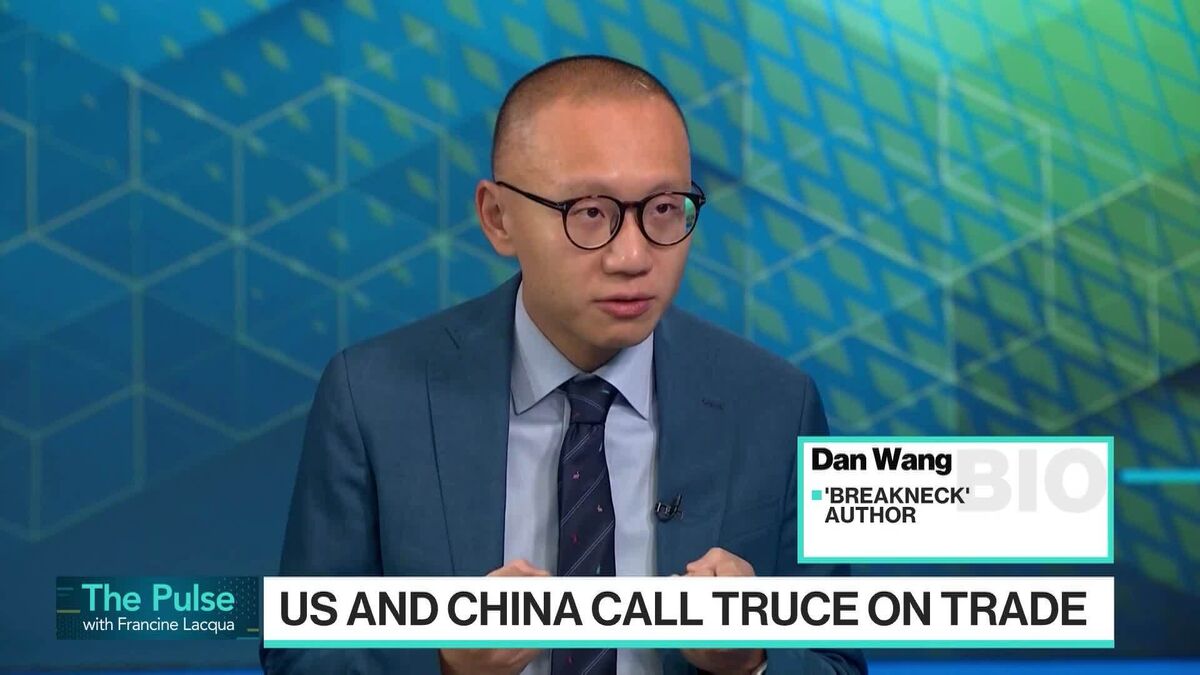
Dan Wang, a research fellow at the Hoover Institution, highlighted the ongoing competition between the U.S. and China in trade and technology, suggesting that the global economy is becoming increasingly protectionist and fragmented. He emphasized that China is intensifying its focus on artificial intelligence and other technologies, posing a significant challenge to the West.
Syntax hacking: Researchers discover sentence structure can bypass AI safety rules
NeutralArtificial Intelligence
Researchers have discovered that certain sentence structures can bypass AI safety rules, shedding light on the mechanics behind successful prompt injection attacks. This finding raises concerns about the robustness of current AI safety protocols and the potential for misuse in various applications.
Will DeepSeek’s new model spark another global AI shake-up in 2026?
NeutralArtificial Intelligence
DeepSeek is set to launch its new AI model, R2, after delays attributed to limited access to computing resources. This development is expected to heighten the ongoing competition between the U.S. and China in the artificial intelligence sector.
Why AI Stops at the Door of Senior Hiring in Indian IT
NeutralArtificial Intelligence
The Indian IT sector is witnessing a significant challenge as artificial intelligence (AI) struggles to penetrate senior hiring processes, which require nuanced, unstructured conversations that AI currently cannot replicate. This limitation raises questions about the role of AI in leadership recruitment, where human judgment and interpersonal skills are paramount.