AI Chipmaker Moore Threads Begins Trading After China’s Second-Biggest IPO

Bloomberg TechnologyThursday, December 4, 2025 at 11:30:00 PM
AI Chipmaker Moore Threads Begins Trading After China’s Second-Biggest IPO
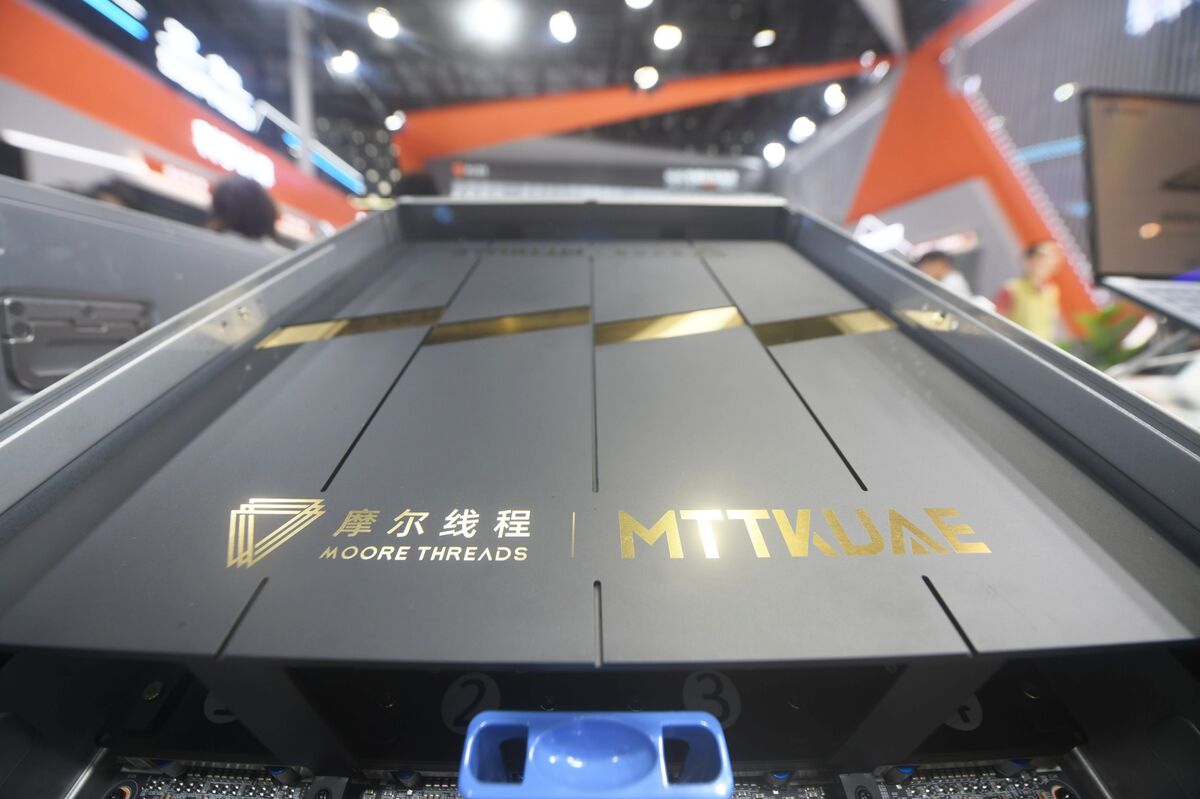
  • Moore Threads Technology Co., a prominent Chinese AI chipmaker, commenced trading on the Shanghai stock exchange, marking the second-largest initial public offering (IPO) in China this year. This significant event underscores the growing interest and investment in the AI sector within the country.
  • The successful IPO is a pivotal moment for Moore Threads, as it not only raises capital for further development and expansion but also enhances its visibility and credibility in the competitive AI market. This could lead to increased partnerships and opportunities in the rapidly evolving technology landscape.
  • This development reflects a broader trend in China's technology sector, where AI startups are gaining traction and attracting substantial investments. Companies like Zhipu are also positioning themselves for IPOs, indicating a robust demand for AI technologies and a shift towards public funding as the industry matures.
— via World Pulse Now AI Editorial System


Was this article worth reading? Share it

Recommended apps based on your readingExplore all apps
Continue Readings
Chinese AI chipmaker Moore Threads raised ~$1.13B in the year's second-largest onshore IPO, valuing it at ~$7.6B, with the retail portion oversubscribed 2,750x (Bloomberg)
PositiveArtificial Intelligence
Chinese AI chipmaker Moore Threads Technology Co. successfully raised approximately $1.13 billion in its initial public offering (IPO), marking the second-largest onshore IPO in China this year, with a valuation of around $7.6 billion and an oversubscription rate of 2,750 times for the retail portion.
Meta Stock Surges on Plans for Metaverse Cuts | Bloomberg Tech 12/4/2025
PositiveArtificial Intelligence
Meta has announced plans to significantly cut resources allocated to its metaverse project, a shift from CEO Mark Zuckerberg's earlier vision of the metaverse as the company's future direction. This decision reflects a reevaluation of priorities amid financial pressures and scrutiny regarding the project's viability.
ByteDance and DeepSeek Are Placing Very Different AI Bets
NeutralArtificial Intelligence
ByteDance and DeepSeek, two prominent players in China's artificial intelligence sector, are pursuing markedly different strategies, highlighting the divergent paths within the industry. While ByteDance focuses on leveraging AI for content creation and user engagement, DeepSeek is emphasizing open-source AI models, such as its recent release that rivals GPT-5.
Nvidia Boss to China: Would You Even Want Our Best Chip Anymore?
NegativeArtificial Intelligence
Jensen Huang, CEO of Nvidia, expressed skepticism about whether China would still desire the company's advanced H200 AI chips, even if U.S. export restrictions were relaxed. This statement reflects the complex dynamics between the U.S. and China regarding technology and trade.
TikTok to Invest $37B+ Into Brazil Data Center
PositiveArtificial Intelligence
TikTok has announced plans to invest over $37 billion to build a data center in Brazil's port of Pecém, marking its first major project in Latin America. This investment reflects China's growing ambitions in South America amid ongoing geopolitical tensions with the US.
The hidden Kenyan workers training China’s AI models
NegativeArtificial Intelligence
An unemployment crisis in Kenya has led to the emergence of companies utilizing opaque systems, including WhatsApp groups and middlemen, to recruit workers for training AI models in China at low wages. This situation highlights the exploitation of vulnerable workers in a challenging economic environment.
GAM takes aim at “context rot”: A dual-agent memory architecture that outperforms long-context LLMs
PositiveArtificial Intelligence
A research team from China and Hong Kong has introduced a new memory architecture called General Agentic Memory (GAM) aimed at addressing the issue of 'context rot' in AI models, which leads to the loss of information during lengthy interactions. This dual-agent system separates memory functions to enhance information retention and retrieval, potentially improving the performance of AI assistants in complex tasks.
Jensen Huang says "we don't know" if China would accept Nvidia's H200 AI chips even if the US relaxed export controls, following a meeting with President Trump (Bloomberg)
NeutralArtificial Intelligence
Nvidia CEO Jensen Huang expressed uncertainty regarding whether China would accept the company's H200 artificial intelligence chips, even if U.S. export restrictions were relaxed, following a meeting with President Trump. This statement reflects ongoing complexities in U.S.-China technology relations.