Autonomous Reinforcement Learning Robot Control with Intel's Loihi 2 Neuromorphic Hardware

arXiv — cs.LGThursday, December 4, 2025 at 5:00:00 AM
  • An end-to-end pipeline has been developed for deploying reinforcement learning (RL) trained Artificial Neural Networks (ANNs) on Intel's Loihi 2 neuromorphic hardware, converting them into spiking Sigma-Delta Neural Networks (SDNNs). This innovation was tested using an RL policy for controlling the Astrobee free-flying robot, demonstrating low-latency and energy-efficient inference in NVIDIA's Omniverse Isaac Lab simulation environment.
  • This development is significant for Intel as it showcases the capabilities of its Loihi 2 architecture in practical applications, particularly in robotic control. The successful transformation of ANN policies into SDNNs indicates a step forward in neuromorphic computing, potentially enhancing the efficiency and responsiveness of robotic systems in various environments.
  • The advancement highlights a growing trend in the integration of reinforcement learning with neuromorphic hardware, particularly in space applications. The successful testing of RL control on the NASA Astrobee aboard the International Space Station underscores the potential for autonomous systems in challenging environments, paving the way for future innovations in robotics and AI.
— via World Pulse Now AI Editorial System
Was this article worth reading? Share it

Recommended apps based on your readingExplore all apps
Continue Readings
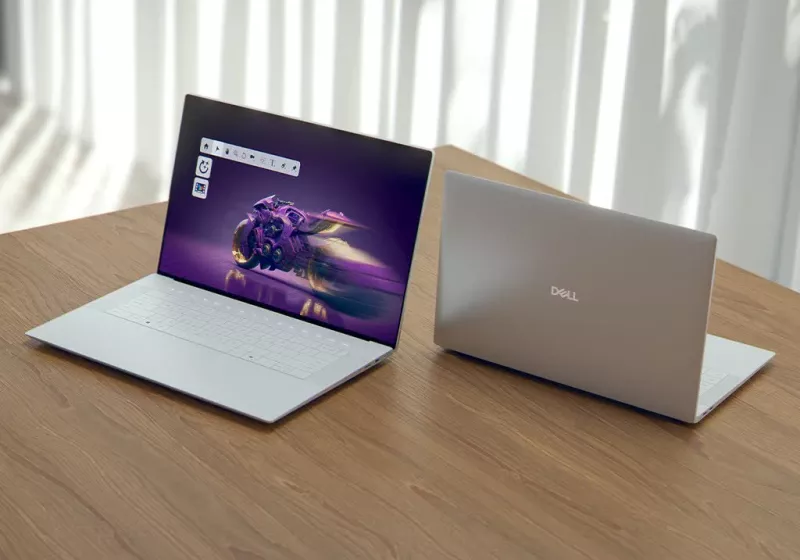
Dell Pro Precision leak reveals early Panther Lake CPU and Xe3 iGPU performance
NeutralArtificial Intelligence
An unannounced Dell laptop has surfaced on Geekbench, indicating that the company is likely revising its product naming strategy just a year after its last update. The benchmark results also provide early insights into the performance of Intel's upcoming Xe3 integrated graphics chips, which are expected to enhance the laptop's capabilities.
How TSMC, Intel, and Amkor are transforming Phoenix into a US chip hub, investing tens of billions and illustrating the difficulties of large-scale US projects (Peter S. Goodman/New York Times)
NeutralArtificial Intelligence
Taiwan Semiconductor Manufacturing Company (TSMC), Intel, and Amkor are investing tens of billions to transform Phoenix into a semiconductor hub, highlighting the complexities of executing large-scale projects in the U.S. This initiative aims to bolster domestic chip production amid global supply chain challenges.
Four Over Six: More Accurate NVFP4 Quantization with Adaptive Block Scaling
PositiveArtificial Intelligence
A new quantization technique called Four Over Six (4/6) has been introduced to enhance the NVFP4 quantization algorithm, which is crucial for large language models (LLMs). This method evaluates two potential scale factors for each block of values, addressing the performance degradation often seen during training and inference due to quantization errors.
Crossing the Sim2Real Gap Between Simulation and Ground Testing to Space Deployment of Autonomous Free-flyer Control
PositiveArtificial Intelligence
The NASA Astrobee has successfully demonstrated the first on-orbit application of reinforcement learning (RL) for autonomous control aboard the International Space Station (ISS). This achievement involved training a deep neural network using NVIDIA's Omniverse physics simulator, allowing the Astrobee to navigate effectively in microgravity environments. The results validate a new training pipeline that bridges the simulation-to-reality gap, showcasing the potential for RL in space robotics.
SLO-aware GPU Frequency Scaling for Energy Efficient LLM Inference Serving
PositiveArtificial Intelligence
A new framework named throttLL'eM has been introduced to optimize energy consumption during Large Language Model (LLM) inference by utilizing GPU frequency scaling while adhering to Service-Level Objectives (SLOs). This approach addresses the growing energy demands associated with LLMs, which are heavily reliant on GPUs for processing. The framework incorporates machine learning to predict future cache usage and batch sizes, allowing for efficient performance management.
Autonomous Planning In-space Assembly Reinforcement-learning free-flYer (APIARY) International Space Station Astrobee Testing
PositiveArtificial Intelligence
The US Naval Research Laboratory's APIARY experiment successfully demonstrated the first reinforcement learning control of a free-flying robot in space using the NASA Astrobee on the International Space Station on May 27, 2025. This experiment involved training a robust control policy in a simulated environment, enhancing the robot's ability to operate autonomously in zero-gravity conditions.
Germany Redirects Intel Funds Into New Wave of Semiconductor Projects
PositiveArtificial Intelligence
Germany has redirected funds initially allocated to Intel into new semiconductor projects, signaling a strategic shift aimed at enhancing its technological capabilities and competitiveness in the European tech sector.
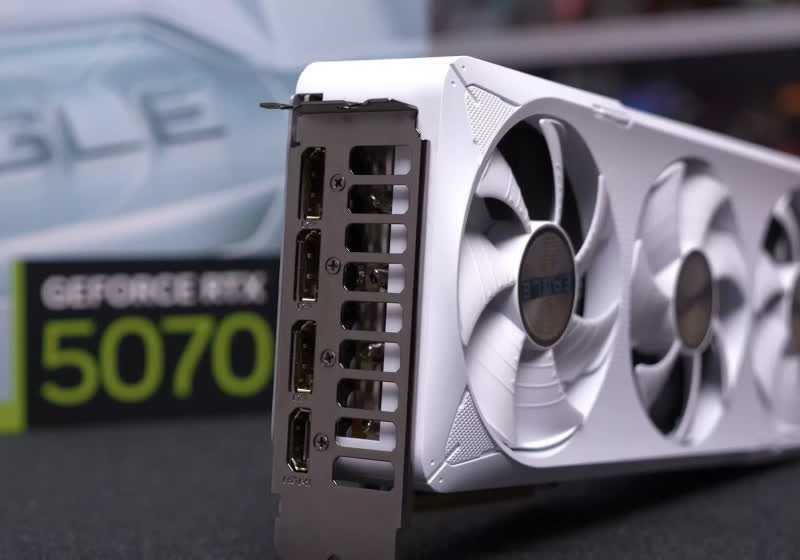
Nvidia dominates discrete GPU market with 92% share despite shifting focus to AI
NeutralArtificial Intelligence
Nvidia maintained a dominant position in the discrete GPU market with a 92% share in Q3 2025, despite a slight decline from 94% in the previous quarter. AMD and Intel have made modest gains, increasing their market shares to 7% and 1.4%, respectively. This shift indicates a competitive landscape as Nvidia continues to focus on AI technologies.