Accuracy-Robustness Trade Off via Spiking Neural Network Gradient Sparsity Trail

arXiv — cs.CVThursday, December 4, 2025 at 5:00:00 AM
  • Recent research has highlighted the potential of Spiking Neural Networks (SNNs) to achieve adversarial robustness through natural gradient sparsity, revealing a trade-off between robustness and generalization in vision-related tasks. This finding suggests that under certain architectural configurations, SNNs can defend against adversarial attacks without explicit regularization.
  • The implications of this development are significant for the fields of computational neuroscience and artificial intelligence, as it opens new avenues for enhancing the resilience of neural networks against adversarial perturbations, which is crucial for real-world applications.
  • This research aligns with ongoing discussions about the efficiency and effectiveness of SNNs compared to traditional artificial neural networks, particularly in terms of energy consumption and performance. The exploration of gradient sparsity and its effects on model generalization reflects a broader trend in AI research focused on balancing accuracy and robustness in machine learning models.
— via World Pulse Now AI Editorial System
Was this article worth reading? Share it

Recommended apps based on your readingExplore all apps
Continue Readings
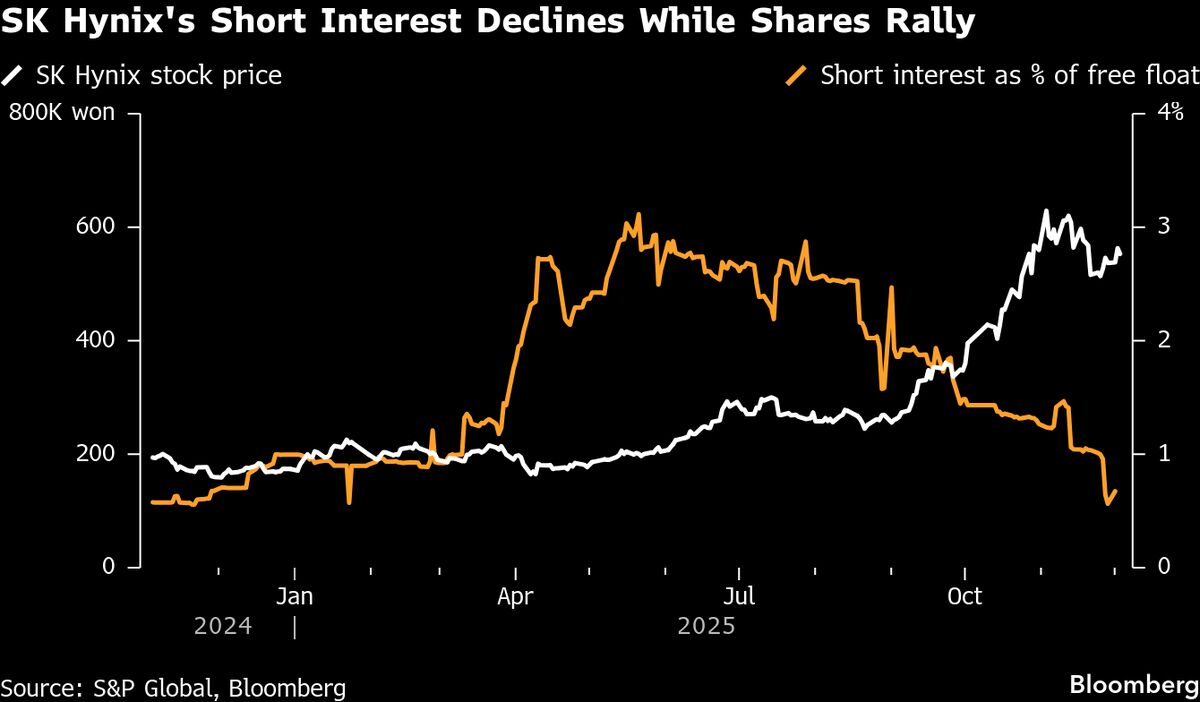
Big Shift in AI Stock Trade Drives Hunt for New Stars in Asia
NeutralArtificial Intelligence
A significant shift in the artificial intelligence stock trade is prompting investors in Asia to seek new equity opportunities, as technological advancements and concerns about market bubbles reshape the investment landscape. This trend reflects a growing interest in identifying potential winners in the AI sector amidst fluctuating market conditions.
ByteDance and DeepSeek Are Placing Very Different AI Bets
NeutralArtificial Intelligence
ByteDance and DeepSeek, two prominent players in China's artificial intelligence sector, are pursuing markedly different strategies, highlighting the divergent paths within the industry. While ByteDance focuses on leveraging AI for content creation and user engagement, DeepSeek is emphasizing open-source AI models, such as its recent release that rivals GPT-5.
From Hypothesis to Premises: LLM-based Backward Logical Reasoning with Selective Symbolic Translation
PositiveArtificial Intelligence
A new framework called Hypothesis-driven Backward Logical Reasoning (HBLR) has been proposed to enhance logical reasoning in large language models (LLMs) by integrating confidence-aware symbolic translation with backward reasoning. This approach aims to address inefficiencies in current forward reasoning paradigms, which often lead to redundant inferences and unreliable conclusions.
Exploring the Potentials of Spiking Neural Networks for Image Deraining
PositiveArtificial Intelligence
A recent study has explored the potential of Spiking Neural Networks (SNNs) for image deraining, introducing the Visual LIF (VLIF) neuron to enhance spatial contextual understanding. This innovative approach addresses limitations in traditional spiking neurons by proposing the Spiking Decomposition and Enhancement Module and the lightweight Spiking Multi-scale Unit, demonstrating superior performance across five benchmark datasets.
Nvidia’s Huang Unsure Whether China Would Accept H200 Chips
NeutralArtificial Intelligence
Nvidia CEO Jensen Huang expressed uncertainty about whether China would accept the company's H200 artificial intelligence chips if U.S. sales restrictions are relaxed, following a meeting with President Donald Trump. This statement highlights the ongoing complexities surrounding U.S.-China trade relations and technology exports.
Temporal Dynamics Enhancer for Directly Trained Spiking Object Detectors
PositiveArtificial Intelligence
A new study introduces the Temporal Dynamics Enhancer (TDE) for Spiking Neural Networks (SNNs), aiming to improve their ability to model temporal information in tasks like object detection. TDE includes a Spiking Encoder and an Attention Gating Module, which together generate diverse stimuli and manage inter-temporal dependencies, enhancing the expressive power of SNNs.
Tech Industry Drive to Block State AI Laws Hits Wall in Congress
NegativeArtificial Intelligence
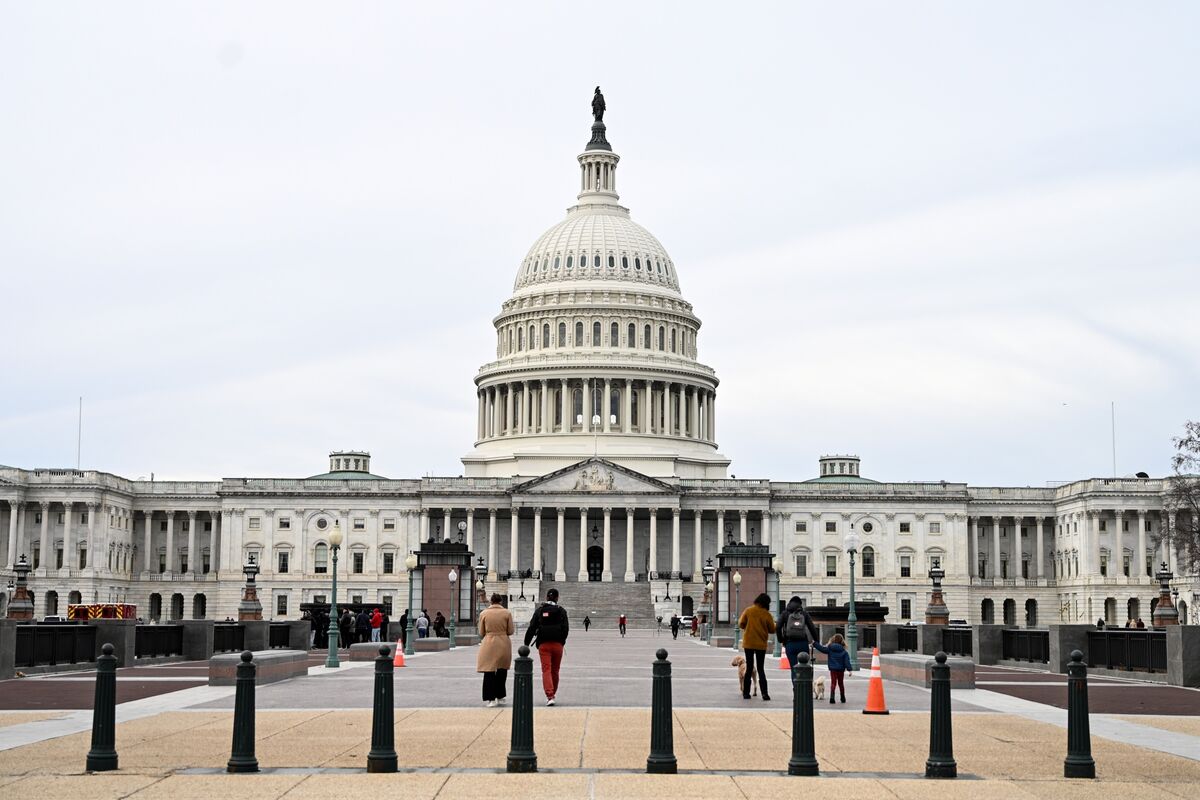
A coalition of tech companies, supported by the White House's AI chief, has failed to convince Congress to include provisions in a critical defense bill that would prevent state-level regulations on artificial intelligence. This setback was indicated by a key congressional Republican, highlighting the challenges faced by the tech industry in influencing legislative outcomes.
Approximate domain unlearning: Enabling safer and more controllable vision-language models
NeutralArtificial Intelligence
A recent study has introduced the concept of approximate domain unlearning, aimed at enhancing the safety and controllability of vision-language models (VLMs), which are pivotal in artificial intelligence for interpreting various forms of visual and textual data.