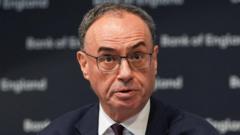
UK inflation falls sharply to 3.2% amid slowdown in food price rises

The GuardianWednesday, December 17, 2025 at 7:37:56 AM
UK inflation falls sharply to 3.2% amid slowdown in food price rises
  • UK inflation has dropped sharply to 3.2% in November, the lowest level in eight months, largely due to a slowdown in food price increases. This decline in the annual inflation rate adds pressure on the Bank of England to consider cutting interest rates in its upcoming meeting.
  • The reduction in inflation is significant for the Bank of England as it may influence its monetary policy decisions, potentially leading to a cut in interest rates aimed at stimulating economic growth and easing the financial burden on consumers.
  • This inflation decrease reflects a broader trend of fluctuating economic conditions in the UK, where inflation rates have been volatile, remaining above the Bank's target of 2%. While the recent drop is positive, concerns persist regarding ongoing inflationary pressures, particularly in food prices, which continue to affect consumer sentiment and economic stability.
— via World Pulse Now AI Editorial System

Was this article worth reading? Share it

Recommended apps based on your readingExplore all apps
Continue Readings
UK consumer sentiment rises to joint-highest of year, GfK says
PositiveFinancial Markets
UK consumer sentiment has risen to its joint-highest level of the year, according to GfK, indicating a positive shift in consumer confidence amidst ongoing economic challenges. This increase suggests that consumers are feeling more optimistic about their financial situations and future spending intentions.
UK car production steadies as JLR recovers and Nissan launches EV production
NeutralFinancial Markets
UK car production has stabilized, with Jaguar Land Rover (JLR) showing signs of recovery and Nissan initiating electric vehicle (EV) production at its Sunderland plant. This development follows Nissan's investment of over £450 million, which includes £300 million directly into the UK automotive sector.
Foreign Holdings of Treasuries Fell in October as China Sold
NegativeFinancial Markets
Overseas holdings of US Treasuries fell in October, primarily due to China reducing its stockpile, while Japan and the UK experienced increases in their holdings. This decline reflects a shift in foreign investment patterns and potential concerns regarding the stability of US debt instruments.
Trump family deal with fusion energy firm adds to complicated UK-US ties
NeutralFinancial Markets
The Trump family has entered into a significant deal with TAE Technologies, a fusion energy firm, which includes a joint venture with the UK government's atomic laboratory. This partnership aims to advance nuclear fusion technology, reflecting a growing interest in sustainable energy solutions.
Faisal Islam: Will 'Santa rate cut' have enough festive spirit to boost the economy?
PositiveFinancial Markets
The Bank of England has announced a pre-Christmas interest rate cut aimed at stimulating the UK economy, which has been facing challenges due to rising living costs and reduced consumer spending. This move is part of broader efforts to inject momentum into economic activity as the country prepares for the upcoming year.
Interest Rate Cut and Slower Inflation Offer Britons a Reprieve
PositiveFinancial Markets
The Bank of England has reduced interest rates to 3.75 percent, marking the sixth cut in a year and a half, a decision welcomed by the government as it seeks to alleviate the high cost of living for Britons. This move comes amid a backdrop of declining inflation, which has dropped to 3.6% in October, indicating a potential turning point for the economy.
The Bank of England cut its key interest rate while the European Central Bank held steady, as a period of more stable borrowing costs sets in across the continent
NeutralFinancial Markets
The Bank of England has reduced its key interest rate from 4% to 3.75%, marking the lowest rate since February 2023. This decision aligns with a broader trend of stabilizing borrowing costs across Europe, while the European Central Bank has opted to maintain its current rates. The move is part of ongoing efforts to stimulate the UK economy amid rising living costs and reduced consumer spending.
Why are UK prices still rising?
NegativeFinancial Markets
UK inflation has decreased from record highs but remains above the Bank of England's target of 2%, with recent figures showing a rate of 3.6% as of October. Despite this drop, food prices have continued to rise, indicating persistent inflationary pressures in certain sectors.

Ready to build your own newsroom?

Subscribe to unlock a personalised feed, podcasts, newsletters, and notifications tailored to the topics you actually care about