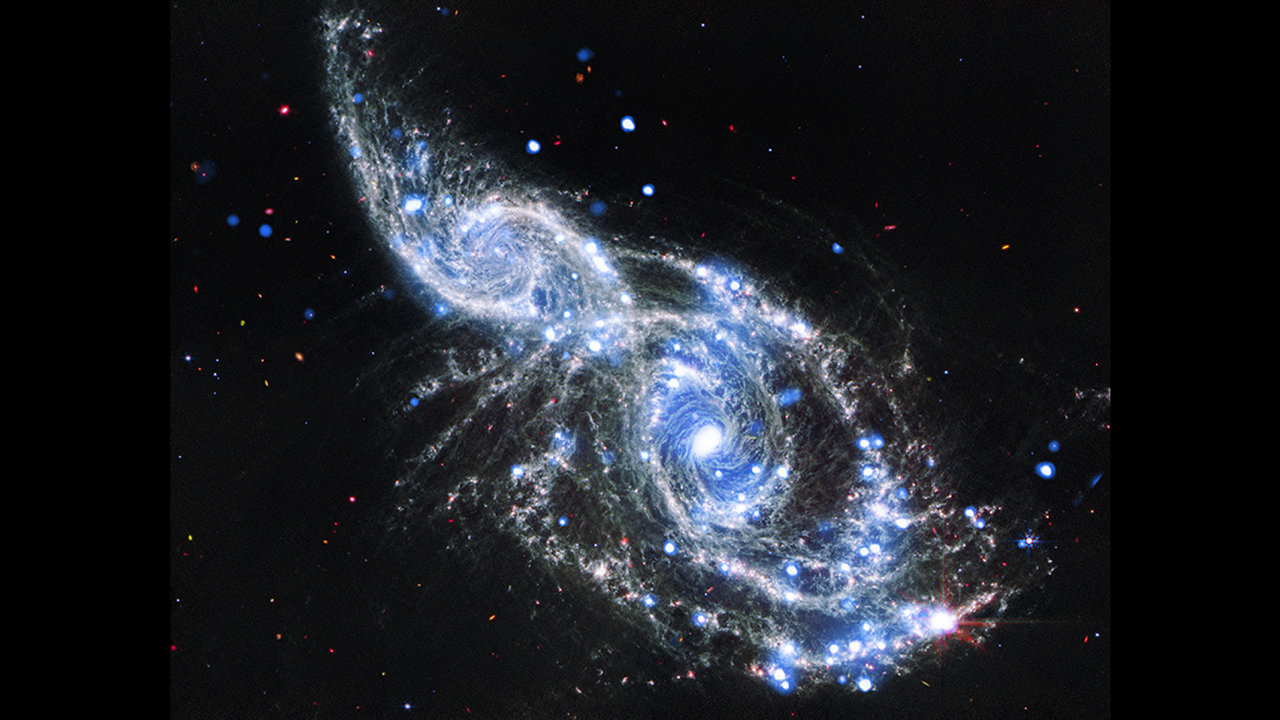
Glittering new James Webb telescope image shows an 'intricate web of chaos' — Space photo of the week

Live ScienceSunday, December 21, 2025 at 11:00:00 AM
PositiveScience
Glittering new James Webb telescope image shows an 'intricate web of chaos' — Space photo of the week
  • A new image from the James Webb Space Telescope, combined with data from the Chandra X-ray Observatory, captures two galaxies in the midst of a collision, showcasing their spiral arms bending and overlapping as they approach each other's cores. This striking visual represents a significant moment in cosmic interactions.
  • The observation is crucial as it enhances understanding of galactic dynamics and the processes involved in galaxy formation and evolution, shedding light on the chaotic nature of the universe.
  • This development aligns with recent findings that suggest galaxies in the early universe were more chaotic than previously thought, indicating a complex interplay of forces at work in cosmic evolution, which continues to challenge existing theories about galaxy formation and the behavior of supermassive black holes.
— via World Pulse Now AI Editorial System
Was this article worth reading? Share it

Recommended apps based on your readingExplore all apps
Continue Readings
James Webb Space Telescope's mysterious 'little red dots' may be black holes in disguise
NeutralScience
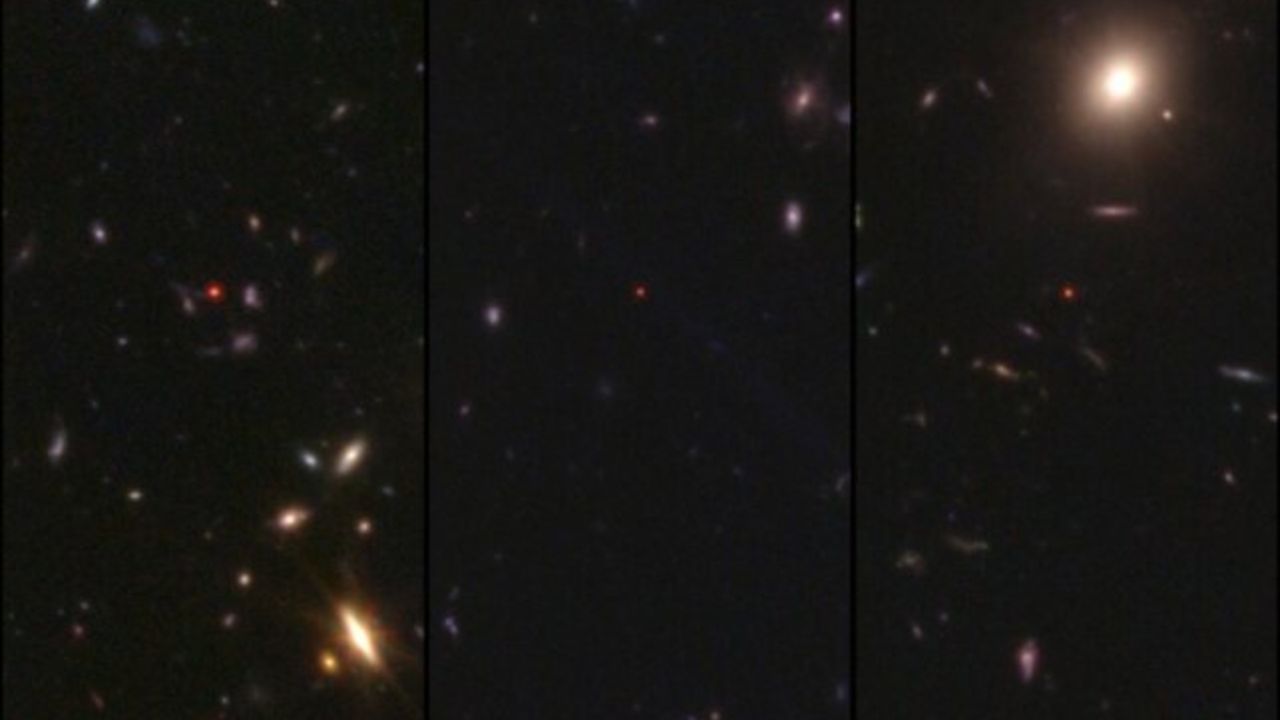
The James Webb Space Telescope (JWST) has identified mysterious 'little red dots' in the early universe, which researchers suggest may be a new type of black hole surrounded by glowing gas. This discovery challenges existing understandings of cosmic structures and their formation.
The universe should be packed with tiny galaxies — so where are they?
NeutralScience
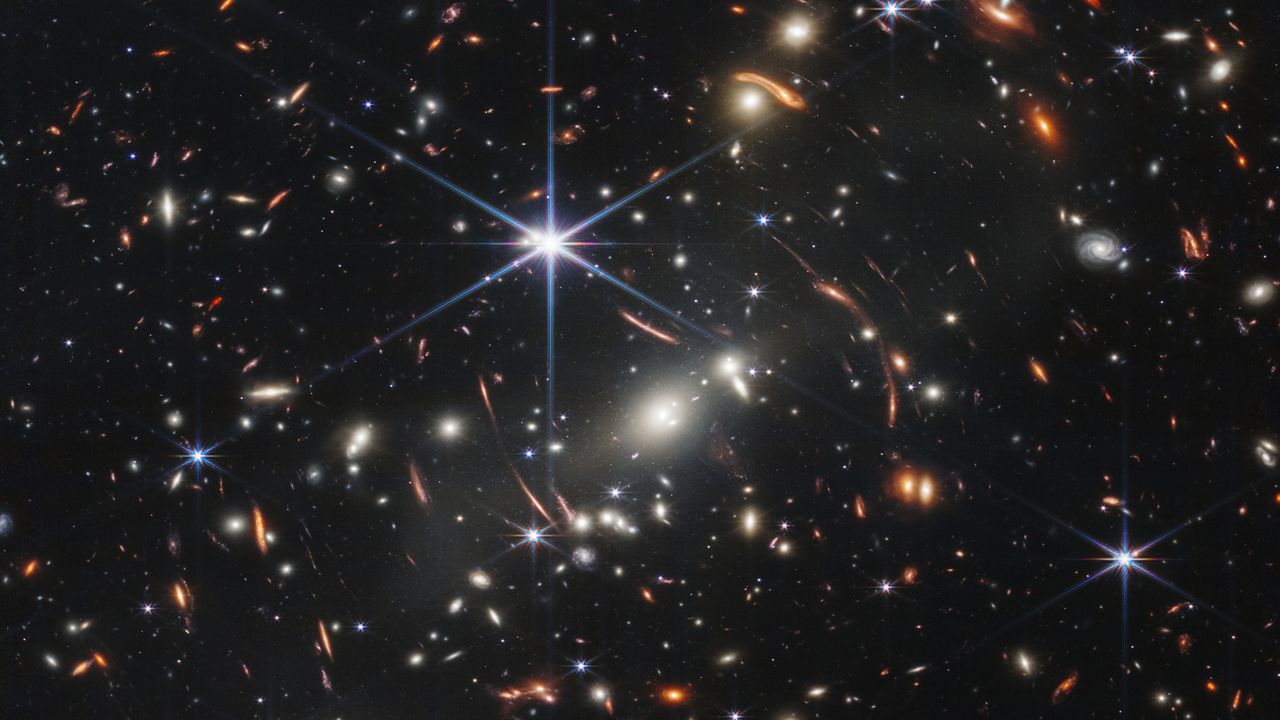
Astronomers have observed that the early universe may not contain as many small galaxies as previously predicted, raising questions about the formation and evolution of the cosmos. This discrepancy suggests that the models used to understand galaxy formation may need to be reevaluated.
'Death by a thousand cuts': James Webb Space Telescope figures out how black hole murdered Pablo's Galaxy
NeutralScience
The James Webb Space Telescope has provided insights into the demise of Pablo's Galaxy, revealing that its destruction was a gradual process of slow starvation rather than a sudden event. This finding highlights the complex interactions between black holes and their host galaxies.

Ready to build your own newsroom?

Subscribe to unlock a personalised feed, podcasts, newsletters, and notifications tailored to the topics you actually care about