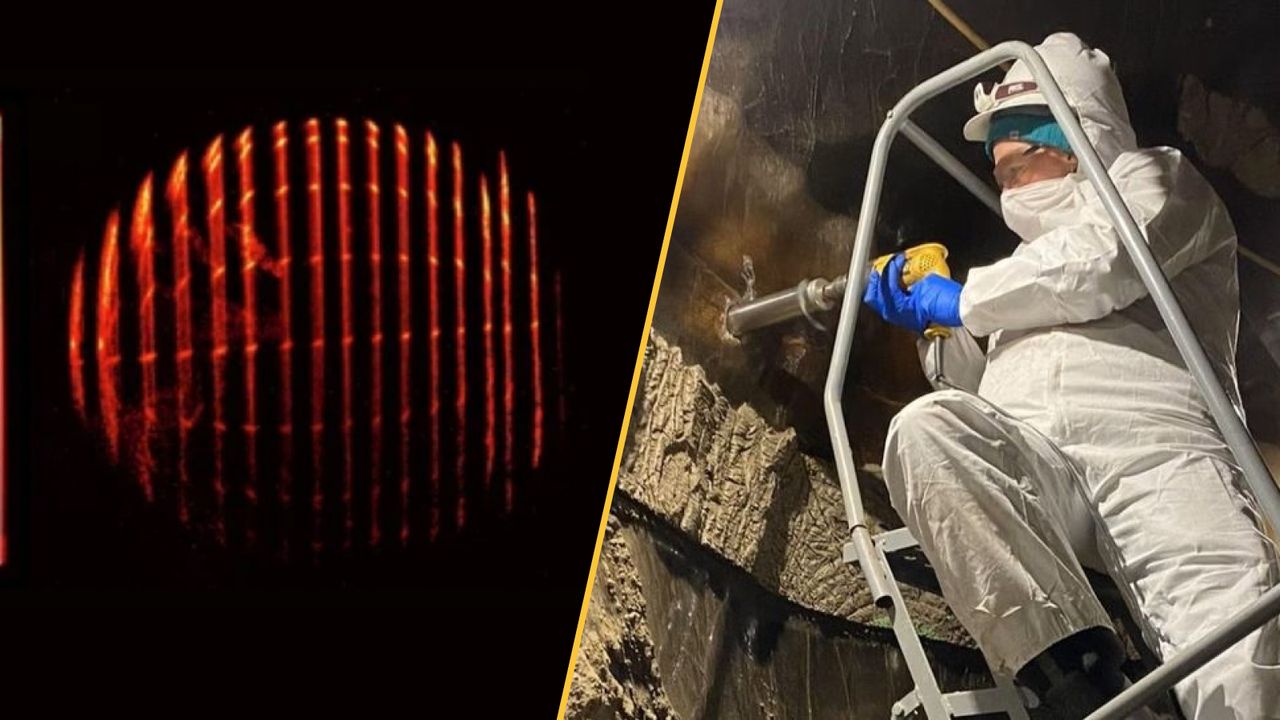
Science news this week: Revived permafrost microbes spew CO2, scientists image object 'moving' at 99.9% the speed of light, and James Webb telescope spots something exciting blasting from black hole M87*

Live ScienceSaturday, October 18, 2025 at 11:00:00 AM
NeutralScience
Science news this week: Revived permafrost microbes spew CO2, scientists image object 'moving' at 99.9% the speed of light, and James Webb telescope spots something exciting blasting from black hole M87*
This week in science news, researchers have revived ancient permafrost microbes that are releasing CO2, highlighting concerns about climate change. Additionally, scientists have successfully imaged an object moving at 99.9% the speed of light, pushing the boundaries of our understanding of physics. The James Webb Telescope has also made an exciting discovery, capturing something intriguing emanating from the black hole M87. These developments are significant as they not only advance our scientific knowledge but also raise important questions about our planet's future and the universe.
— via World Pulse Now AI Editorial System
Was this article worth reading? Share it

Recommended apps based on your readingExplore all apps
Continue Readings
Massive supernova explosion may have created a binary black hole
PositiveScience
A recent study suggests that a massive supernova explosion may have led to the formation of a binary black hole, providing new insights into the evolutionary history of massive stars. This finding highlights the complex processes involved in stellar evolution and the eventual creation of black holes.

Ready to build your own newsroom?

Subscribe to unlock a personalised feed, podcasts, newsletters, and notifications tailored to the topics you actually care about