Bearded Vulture Nests Hold 600 Years of Human Artifacts in Spanish Caves

Scientific AmericanFriday, October 24, 2025 at 10:45:00 AM
PositiveScience
Recent discoveries in Spanish caves have revealed that bearded vulture nests contain artifacts dating back 600 years, including a crossbow bolt, part of a slingshot, and 25 shoes. This finding is significant as it not only sheds light on the historical interactions between humans and wildlife but also highlights the importance of these nests as archaeological sites. Such discoveries can help us understand past human behaviors and the environment, making it a fascinating topic for both scientists and history enthusiasts.
— via World Pulse Now AI Editorial System

Was this article worth reading? Share it

Recommended apps based on your readingExplore all apps
Continue Readings
New Views of Saturn’s Moon Titan and Jupiter’s Moon Europa Complicate Ocean Worlds Theory
NeutralScience
Recent observations of Saturn’s moon Titan and Jupiter’s moon Europa have introduced complexities to the theory of ocean worlds, which posits that these celestial bodies may harbor subsurface oceans capable of supporting life. Scientists are now reevaluating the conditions and characteristics of these moons based on new data.
Snakes' mind-bending 'heat vision' inspires scientists to build a 4K imaging system that could one day fit into your smartphone
PositiveScience
Scientists have developed a new 4K imaging system inspired by the heat vision of snakes, enabling smartphones to detect infrared radiation. This advancement allows for a significant expansion of the visual capabilities of mobile devices, moving beyond the limitations of the human eye.
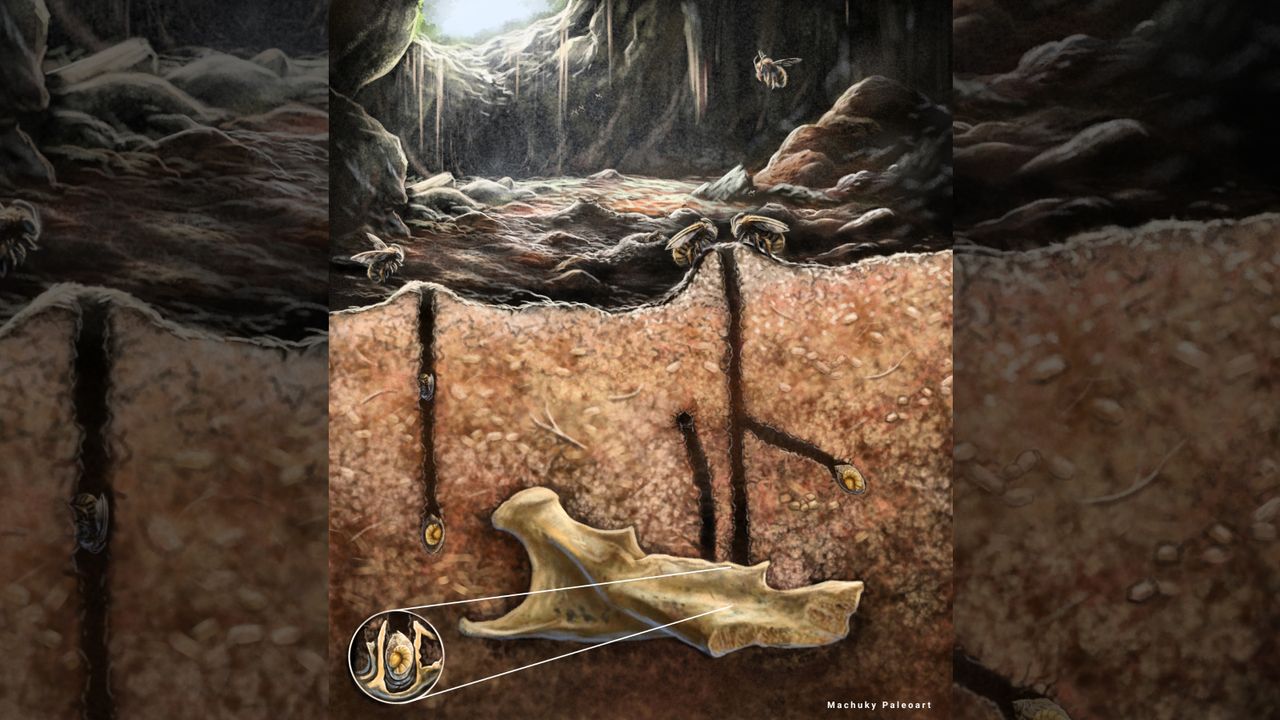
Ancient Bees Burrowed Inside Bones, Fossils Reveal
PositiveScience
Scientists have made a groundbreaking discovery revealing that ancient bees utilized the bones of now-extinct species as nesting sites thousands of years ago. This finding highlights a unique interaction between bees and their environment, showcasing how these insects adapted to available resources for reproduction.
Ancient burrowing bees made their nests in the tooth cavities and vertebrae of dead rodents, scientists discover
NeutralScience
Scientists have discovered fossilized nests of ancient burrowing bees inside the tooth cavities and vertebrae of dead rodents in a cave on the Caribbean island of Hispaniola. This finding indicates that these bees utilized the bones of now-extinct species as nesting sites thousands of years ago, showcasing a unique interaction between these insects and their environment.

Ready to build your own newsroom?

Subscribe to unlock a personalised feed, podcasts, newsletters, and notifications tailored to the topics you actually care about