30 years of SOHO staring at the sun | Space photo of the day for Dec. 2, 2025
PositiveScience
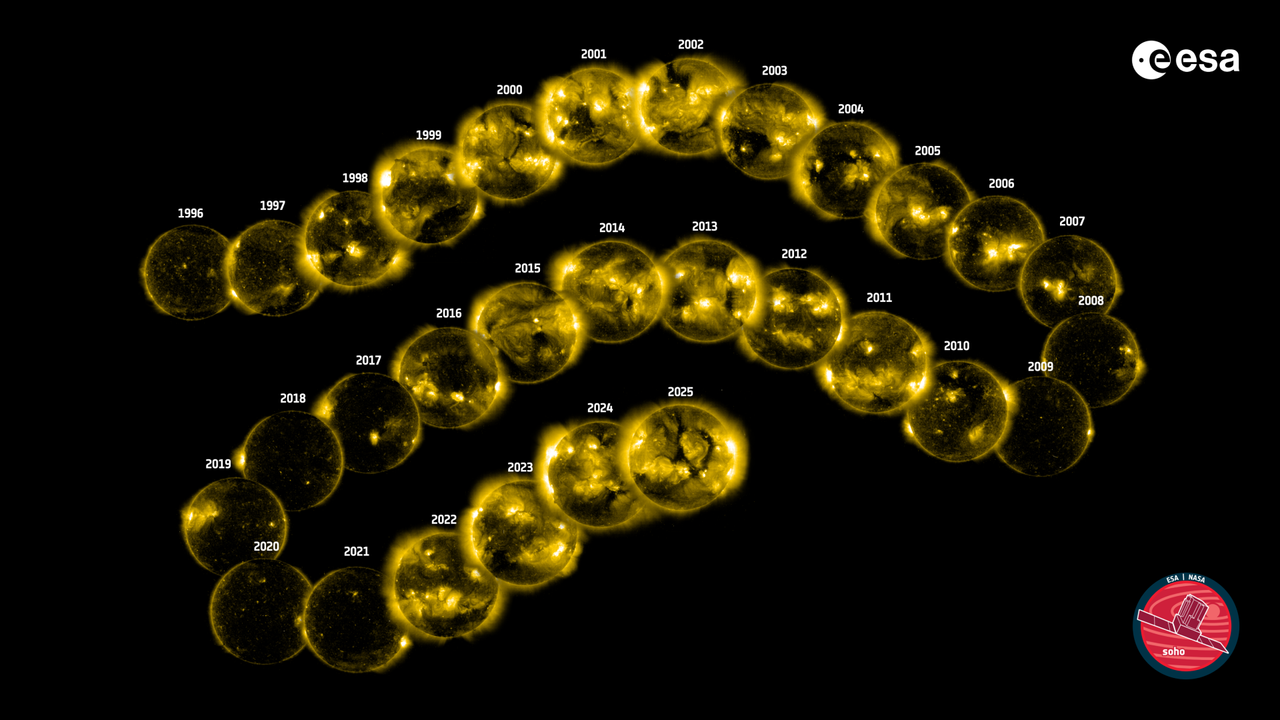
- This year marks the 30th anniversary of the Solar and Heliospheric Observatory (SOHO), a mission initially intended to last just three years. Since its launch, SOHO has provided invaluable data on solar activity, significantly enhancing our understanding of the sun's behavior and its impact on space weather.
- The longevity of the SOHO mission underscores the importance of continuous solar observation, which is crucial for predicting solar storms that can affect satellite operations and power grids on Earth. This milestone reflects the success of international collaboration in space science.
- The achievements of SOHO are part of a broader narrative in space exploration, where advancements in technology and international cooperation have led to remarkable discoveries. Similar missions, such as the Euclid space telescope and observations from the International Space Station, highlight the ongoing efforts to explore and understand the cosmos, showcasing the dynamic nature of scientific inquiry.
— via World Pulse Now AI Editorial System