Chip Company Plotted to Send Technology to China, Ex-C.E.O. Says

The New York Times - TechnologyWednesday, December 10, 2025 at 5:00:08 AM
NegativeTechnology
Chip Company Plotted to Send Technology to China, Ex-C.E.O. Says
  • The former chief executive of Nexperia, a Dutch semiconductor company, revealed that Dutch officials were aware for years of the company's Chinese owner’s intentions to transfer technology to China. This revelation follows the Dutch government's seizure of Nexperia in September, amid rising concerns over technology security.
  • This situation is critical for Nexperia as it highlights the ongoing tensions between the Netherlands and China regarding foreign investments and technology control. The company's future operations and its ability to supply chips may be jeopardized by these geopolitical dynamics.
  • The broader implications of this development reflect a growing trend of scrutiny over semiconductor technology transfers to China, as nations grapple with national security concerns. The situation is compounded by calls for enhanced tracking of semiconductor exports and ongoing debates about the balance between trade and security in the global tech landscape.
— via World Pulse Now AI Editorial System


Was this article worth reading? Share it

Continue Readings
China Forces Reckoning in Europe as Trade Boom Turns Existential
NegativeTechnology
China's exports are increasingly challenging European markets, leading to a potential clash between the two economic powers. This trade boom is raising concerns about the sustainability of European industries and their ability to compete in a rapidly changing global landscape.
China Officials, PDD Staff Get Into Fistfights During Audit
NegativeTechnology
Last week, two fistfights occurred between employees of PDD Holdings Inc. and Chinese regulators during an audit at the company's Shanghai offices, highlighting tensions between the e-commerce firm and government oversight.
China’s AI Power Play: Cheap Electricity From World’s Biggest Grid
NeutralTechnology
China's government is pushing for power supremacy by transforming Inner Mongolia into a hub for cheap electricity, which is crucial for its artificial intelligence (AI) ambitions. This initiative aims to bolster China's position in the global tech landscape amid rising competition, particularly from the U.S.
SpaceX Said to Pursue 2026 IPO | Bloomberg Tech 12/10/2025
NeutralTechnology
SpaceX is reportedly targeting an initial public offering (IPO) in 2026, aiming to raise over $30 billion, which would set a record for the largest IPO in history. This announcement comes as the company prepares to sell insider shares that could value it at up to $800 billion, reflecting strong investor confidence in its future prospects.
US taking 25% cut of Nvidia chip sales “makes no sense,” experts say
NegativeTechnology
President Trump has announced a significant policy shift allowing Nvidia to sell its advanced H200 AI chips to approved customers in China, effectively lifting a previous export ban imposed due to national security concerns. This decision includes a 25% surcharge on sales, which experts have criticized as illogical given the context of the deal.
U.S. Investors Are Going Big on China AI Despite Concerns in Congress
PositiveTechnology
U.S. investors are significantly increasing their investments in Chinese artificial intelligence (AI) companies, despite rising tensions between Washington and Beijing regarding technology competition. This trend reflects a strong belief in the potential of AI to drive economic growth and innovation.
Silicon Valley Is Racing to Make Critical Minerals—and Blunt China’s Dominance
NeutralTechnology
Startups and venture capital in Silicon Valley are accelerating efforts to develop new sources of critical minerals, aiming to reduce the United States' reliance on China, which currently dominates the supply of these essential materials.
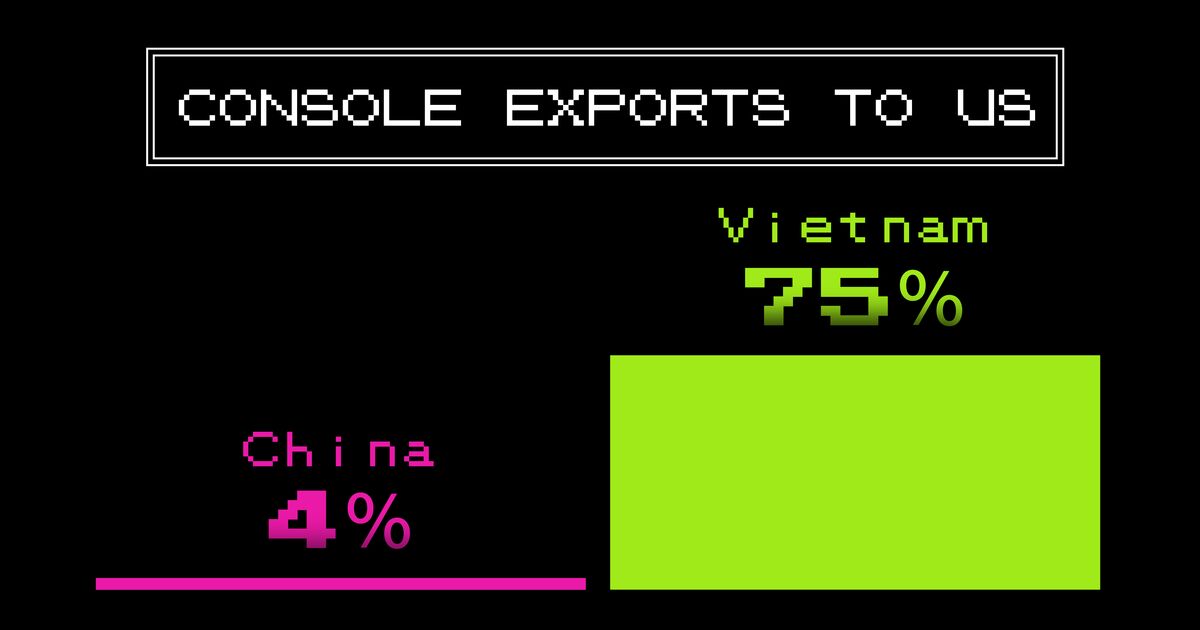
<strong>Made in Vietnam: Trump Tariffs Ended China’s Monopoly on US Video Game Consoles</strong>
PositiveTechnology
The implementation of Trump tariffs has effectively ended China's monopoly on the U.S. video game console market, paving the way for Vietnam to emerge as a significant player in this industry. This shift allows for increased competition and diversification in the market, benefiting consumers and manufacturers alike.