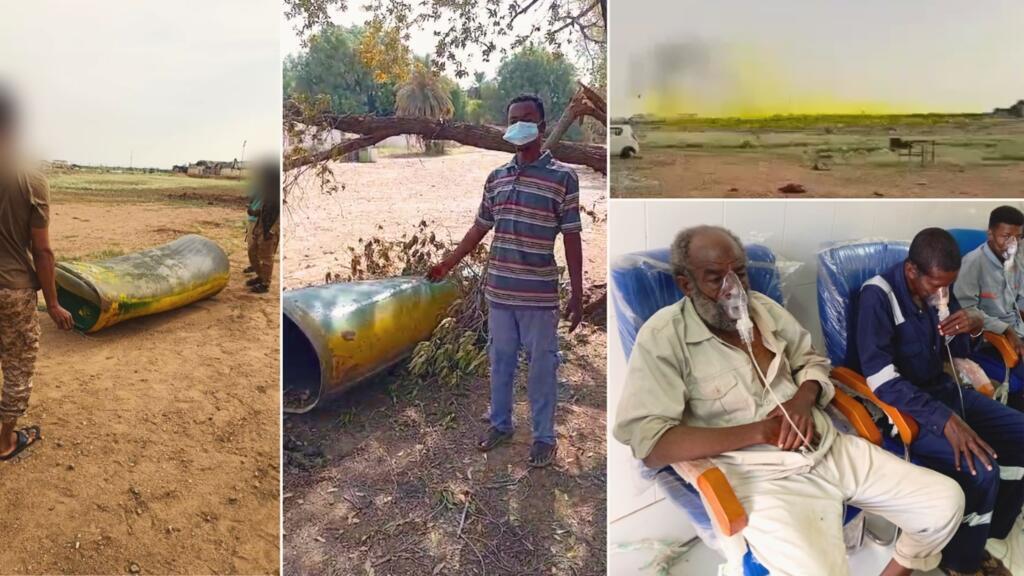
Videos show the Sudanese army's use of chlorine gas as a weapon

France 24Thursday, October 9, 2025 at 9:11:32 AM
Videos show the Sudanese army's use of chlorine gas as a weapon
The recent allegations against the Sudanese army for using chlorine gas as a weapon in its conflict with the Rapid Support Forces have raised serious concerns. While the US has accused the army of deploying chemical weapons, they have not provided evidence to back their claims, and the Sudanese army has denied the accusations. However, video evidence documented by the FRANCE 24 Observers team shows incidents where chlorine barrels were dropped from the air near Khartoum. This situation is critical as international law prohibits the use of such chemical agents in warfare, highlighting the need for accountability and adherence to global standards.
— via World Pulse Now AI Editorial System

Was this article worth reading? Share it

Recommended Readings
Italian prosecutors investigate alleged ‘sniper tourism’ in 1990s Bosnia war
NegativeWorld Affairs
Italian prosecutors in Milan are investigating allegations of 'sniper tourism' during the 1990s Bosnia war, where wealthy Italians reportedly paid members of the Army of Republika Srpska to shoot civilians for sport. Payments ranged from €80,000 to €100,000, with higher fees for targeting children. This investigation highlights the disturbing intersection of wealth and violence in conflict zones.
Israeli government targets second-most popular radio station
NegativeWorld Affairs
Israel's defense minister, Israel Katz, has announced plans to close Army Radio, the second-most popular radio station in the country, by March 1. The stated reason for this closure is to preserve the military's nonpartisan character. However, Tal Lev Ram, the station's chief, has condemned this decision, arguing that it poses a significant threat to press freedom and undermines the integrity of Israeli society and its military. The announcement has sparked widespread criticism regarding its potential impact on editorial independence, raising concerns about the future of media freedom in Israel.
Ghana helicopter crash caused by bad weather and safety gaps, report says
NegativeWorld Affairs
A military helicopter crash in southern Ghana in August resulted in the deaths of eight individuals, including the defence and environment ministers. An official investigation revealed that the crash was primarily caused by adverse weather conditions, limited visibility, and challenging hilly terrain. Although the 12-year-old helicopter was deemed airworthy, it lacked essential safety features, and deficiencies in aviation infrastructure further contributed to the tragedy. This incident highlights critical safety gaps in Ghana's aviation sector, raising concerns about the adequacy of current safety measures and infrastructure.
Iran faces unprecedented water crisis
NegativeWorld Affairs
Iran is experiencing an unprecedented water crisis, with reservoir levels dropping to their lowest in 60 years. In response, authorities have implemented measures such as reducing water pressure at night, although there have been no cuts in the capital. While conditions have slightly improved, the situation remains serious. The government is planning long-term reforms aimed at curbing water consumption to balance the needs of agriculture and public use, highlighting the critical nature of water management in the country.
Sudan aid delivery talks hailed as 'constructive' by UN humanitarian chief
PositiveWorld Affairs
UN humanitarian chief Tom Fletcher held 'constructive' talks with Sudan's army leader Abdel Fattah al-Burhan to facilitate life-saving aid delivery in war-torn Sudan, where millions face famine and displacement due to ongoing conflict between the army and the Rapid Support Forces (RSF).
Suicide bomber kills at least a dozen people outside court in Pakistan's capital
NegativeWorld Affairs
A suicide bomber attacked outside a court in Islamabad, Pakistan, on November 11, killing at least 12 people and injuring 27 others. This tragic event highlights ongoing security challenges in the region and raises concerns about public safety in crowded areas.