Computer maker HP to cut up to 6,000 jobs by 2028 as it turns to AI

The Guardian — Artificial IntelligenceWednesday, November 26, 2025 at 2:53:31 PM
Computer maker HP to cut up to 6,000 jobs by 2028 as it turns to AI
  • HP has announced plans to cut up to 6,000 jobs globally by 2028 as part of a strategy to enhance product development through increased use of artificial intelligence. This decision follows a lower-than-expected profit outlook for the upcoming year, indicating a shift in the company's operational focus.
  • The job cuts are expected to save HP approximately $1 billion annually, reflecting the company's efforts to streamline operations and improve customer satisfaction amid a challenging market environment.
  • This move aligns with broader trends in the technology sector, where companies are increasingly adopting AI to optimize processes, but it also raises concerns about job displacement and the potential for significant workforce reductions across various industries, as highlighted by recent studies on automation's impact on low-skilled jobs.
— via World Pulse Now AI Editorial System
Was this article worth reading? Share it

Recommended apps based on your readingExplore all apps
Continue Readings
US Sets 25% Tariff on Some Chip Sales as Part of Nvidia Deal
NeutralArtificial Intelligence
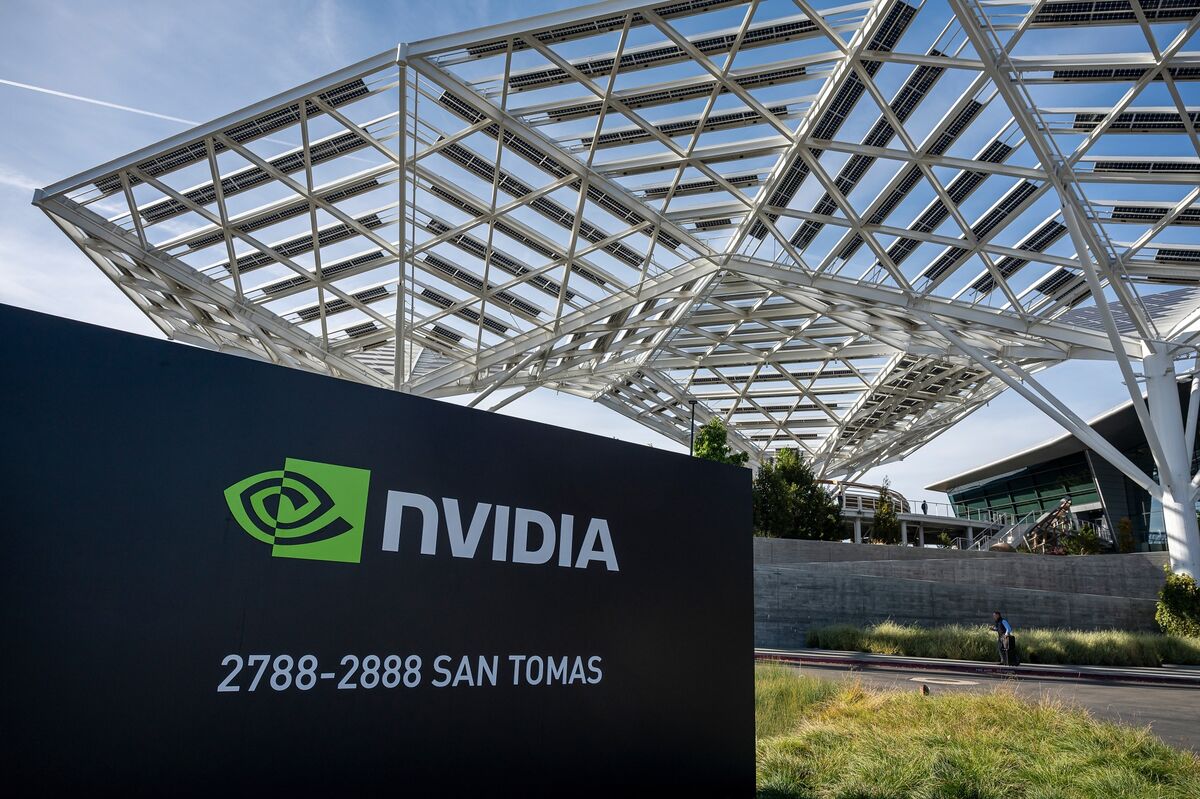
The United States has imposed a 25% tariff on imports of certain advanced semiconductors, a move linked to an agreement allowing Nvidia Corp. to export its H200 artificial intelligence processors manufactured in Taiwan to China. This decision was endorsed by President Donald Trump, marking a significant shift in U.S. technology export policy.
AI and high-throughput testing reveal stability limits in organic redox flow batteries
PositiveArtificial Intelligence
Recent advancements in artificial intelligence (AI) and high-throughput testing have unveiled the stability limits of organic redox flow batteries, showcasing the potential of these technologies to enhance scientific research and innovation.
AI’s Hacking Skills Are Approaching an ‘Inflection Point’
NeutralArtificial Intelligence
AI models are increasingly proficient at identifying software vulnerabilities, prompting experts to suggest that the tech industry must reconsider its software development practices. This advancement indicates a significant shift in the capabilities of AI technologies, particularly in cybersecurity.
Use of AI to harm women has only just begun, experts warn
NegativeArtificial Intelligence
Experts warn that the use of AI to create harmful sexualized imagery, particularly targeting women and children, is just beginning, as evidenced by the controversial Grok AI chatbot developed by Elon Musk's xAI. Despite recent attempts to implement safeguards, users continue to exploit the tool for generating explicit content.
Explaining Generalization of AI-Generated Text Detectors Through Linguistic Analysis
NeutralArtificial Intelligence
A recent study published on arXiv investigates the generalization capabilities of AI-generated text detectors, revealing that while these detectors perform well on in-domain benchmarks, they often fail to generalize across various generation conditions, such as unseen prompts and different model families. The research employs a comprehensive benchmark involving multiple prompting strategies and large language models to analyze performance variance through linguistic features.
Principled Design of Interpretable Automated Scoring for Large-Scale Educational Assessments
PositiveArtificial Intelligence
A recent study has introduced a principled design for interpretable automated scoring systems aimed at large-scale educational assessments, addressing the growing demand for transparency in AI-driven evaluations. The proposed framework, AnalyticScore, emphasizes four principles of interpretability: Faithfulness, Groundedness, Traceability, and Interchangeability (FGTI).
RAVEN: Erasing Invisible Watermarks via Novel View Synthesis
NeutralArtificial Intelligence
A recent study introduces RAVEN, a novel approach to erasing invisible watermarks from AI-generated images by reformulating watermark removal as a view synthesis problem. This method generates alternative views of the same content, effectively removing watermarks while maintaining visual fidelity.
What the future holds for AI – from the people shaping it
NeutralArtificial Intelligence
The future of artificial intelligence (AI) is being shaped by ongoing discussions among key figures in the field, as highlighted in a recent article from Nature — Machine Learning. These discussions focus on the transformative potential of AI across various sectors, including technology, healthcare, and materials science.

Ready to build your own newsroom?

Subscribe to unlock a personalised feed, podcasts, newsletters, and notifications tailored to the topics you actually care about