Google is relying on its own chips for its AI system Gemini. Here's why that's a seismic change for the industry

Phys.org — AI & Machine LearningTuesday, December 2, 2025 at 5:46:41 PM
Google is relying on its own chips for its AI system Gemini. Here's why that's a seismic change for the industry
  • Google has shifted its focus to using its own Tensor Processing Units (TPUs) for its AI system, Gemini, marking a significant departure from its previous reliance on Nvidia's GPUs, which have long dominated the AI chip market.
  • This transition allows Google to enhance its competitive edge in the AI sector, potentially reducing costs for partners like OpenAI, which reportedly saved 30% on Nvidia chips due to this increased competition, thereby reshaping the landscape of AI hardware.
  • The move reflects a broader trend in the tech industry where companies are increasingly seeking alternatives to Nvidia's offerings, with Google actively pitching its TPUs to major clients, including Meta and financial institutions, indicating a shift towards more diverse AI computing solutions.
— via World Pulse Now AI Editorial System


Was this article worth reading? Share it

Recommended apps based on your readingExplore all apps
Continue Readings
Amazon challenges competitors with on-premises Nvidia ‘AI Factories’
PositiveArtificial Intelligence
Amazon has launched on-premises Nvidia ‘AI Factories’ in collaboration with Nvidia, integrating AWS technology with Nvidia's advanced AI chips to enhance its artificial intelligence capabilities. This initiative aims to provide businesses with robust AI solutions tailored for on-site deployment.
Google Discover is testing AI-generated headlines and they aren't good
NegativeArtificial Intelligence
Google Discover is currently testing AI-generated headlines, but early feedback indicates that the results are subpar, raising concerns about the effectiveness of AI in content creation. This development highlights ongoing challenges in the integration of AI technologies within Google's platforms.
OpenAI CEO declares “code red” as Gemini gains 200 million users in 3 months
PositiveArtificial Intelligence
OpenAI CEO Sam Altman has declared a 'code red' for ChatGPT as Google’s Gemini 3 rapidly gains traction, amassing 200 million users within just three months of its launch. This shift marks a significant change in the competitive landscape of AI technologies, with Google now posing a formidable challenge to OpenAI's flagship product.
Google tests merging AI Overviews with AI Mode
NeutralArtificial Intelligence
Google is currently testing a new feature that merges AI Overviews with its AI Mode, aimed at enhancing the transition from traditional search to AI-driven chat interactions. This global test reflects the company's ongoing efforts to innovate its search capabilities by integrating advanced AI functionalities.
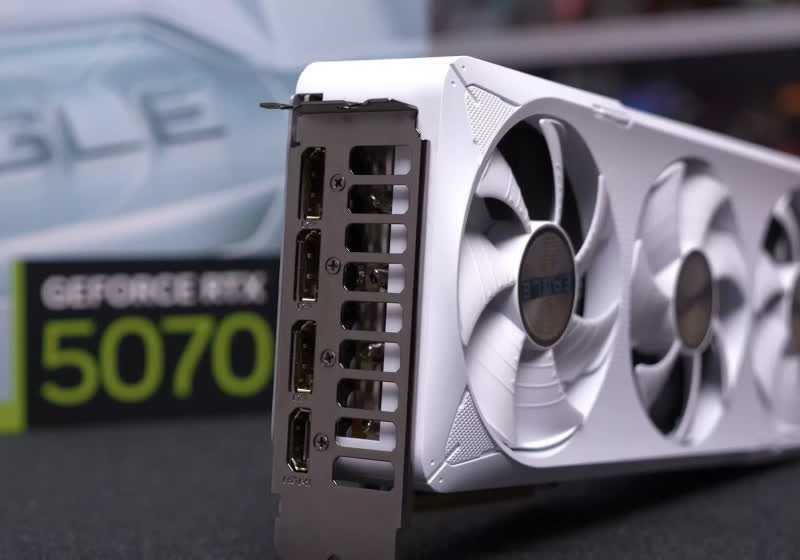
Nvidia dominates discrete GPU market with 92% share despite shifting focus to AI
NeutralArtificial Intelligence
Nvidia maintained a dominant position in the discrete GPU market with a 92% share in Q3 2025, despite a slight decline from 94% in the previous quarter. AMD and Intel have made modest gains, increasing their market shares to 7% and 1.4%, respectively. This shift indicates a competitive landscape as Nvidia continues to focus on AI technologies.
Google announces second Android 16 release of 2025 is heading to Pixels
PositiveArtificial Intelligence
Google has announced that the second Android 16 release of 2025 is now rolling out to Pixel devices, starting today. This update is expected to enhance the functionality and performance of these smartphones, aligning them with the latest advancements in Android technology.
Amazon's new AI can code for days without human help. What does that mean for software engineers?
PositiveArtificial Intelligence
Amazon Web Services (AWS) has unveiled a new class of AI systems known as 'frontier agents' that can autonomously code for extended periods, potentially transforming the software development lifecycle. This announcement was made by AWS CEO Matt Garman during the re:Invent conference, highlighting three specialized agents: Kiro for software development, AWS Security Agent for application security, and AWS DevOps Agent for IT operations.
Amazon Fires Back at OpenAI and Google with New Nova Models and Nova Forge
PositiveArtificial Intelligence
Amazon has launched new Nova models and Nova Forge, an open training capability that allows organizations to create customized AI variants called Novellas. This initiative positions Amazon as a competitive player in the AI landscape, directly challenging established companies like OpenAI and Google.