Sundar Pichai says Google will deploy solar-powered data centers in space by 2027

TechSpotWednesday, December 3, 2025 at 9:54:00 PM
Sundar Pichai says Google will deploy solar-powered data centers in space by 2027
  • Google CEO Sundar Pichai announced that the company plans to deploy solar-powered data centers in space by 2027 as part of Project Suncatcher, which aims to enhance the sustainability of data centers by utilizing solar energy. This initiative was discussed during an interview with Fox News, highlighting Google's commitment to innovative energy solutions.
  • The deployment of solar-powered data centers represents a significant step for Google in addressing the energy demands of its data centers, which are known for their high energy consumption. By harnessing solar energy, Google aims to reduce its carbon footprint and lead the way in sustainable technology practices.
  • This development aligns with ongoing discussions in the tech industry regarding the sustainability of artificial intelligence and data infrastructure. Pichai has previously expressed concerns about the irrational investment trends in AI, indicating that while Google is making strides in sustainability, the broader industry faces challenges related to investment cycles and potential market corrections.
— via World Pulse Now AI Editorial System


Was this article worth reading? Share it

Recommended apps based on your readingExplore all apps
Continue Readings
Google launches Workspace Studio, a no-code tool to create, design, manage, and share AI agents, for users on Business and Enterprise Workspace plans (Abner Li/9to5Google)
PositiveArtificial Intelligence
Google has officially launched Workspace Studio, a no-code tool designed for users on Business and Enterprise Workspace plans, enabling them to create, design, manage, and share AI agents. This launch follows earlier announcements and aims to enhance automation within organizations.
Gemini 3 Pro scores 69% trust in blinded testing up from 16% for Gemini 2.5: The case for evaluating AI on real-world trust, not academic benchmarks
PositiveArtificial Intelligence
Google has introduced its Gemini 3 AI model, achieving a significant increase in user trust, scoring 69% in blinded testing, compared to just 16% for its predecessor, Gemini 2.5. This evaluation, conducted by Prolific, emphasizes real-world trust over traditional academic benchmarks, highlighting the model's practical effectiveness.
Google's Workspace Studio puts Gemini 3 agents to work automating tasks
PositiveArtificial Intelligence
Google has launched Workspace Studio, a new tool designed for building and managing AI agents within Google Workspace, utilizing the capabilities of its latest AI model, Gemini 3. This rollout aims to enhance automation and streamline task management for users.
Google AI rewrites news headlines for its Discover feed, breaking its own anti-clickbait rules
NegativeArtificial Intelligence
Google is testing a new AI feature in its Discover news feed that rewrites editorial headlines, often resulting in shorter, more provocative, or incorrect versions, which contradicts its own anti-clickbait policies. This development raises concerns about the quality and reliability of information presented to users.
Google just gave Android users several compelling reasons to stay (including this scam tool)
PositiveArtificial Intelligence
Google has introduced several new features for Android 16 users, including urgent call indicators, enhanced scam protection, and pinned tabs in Chrome, aimed at improving user experience and security. These updates reflect Google's ongoing commitment to enhancing its Android platform.
Amazon's Nova 2 undercuts OpenAI and Google on price but still trails top-tier models
NeutralArtificial Intelligence
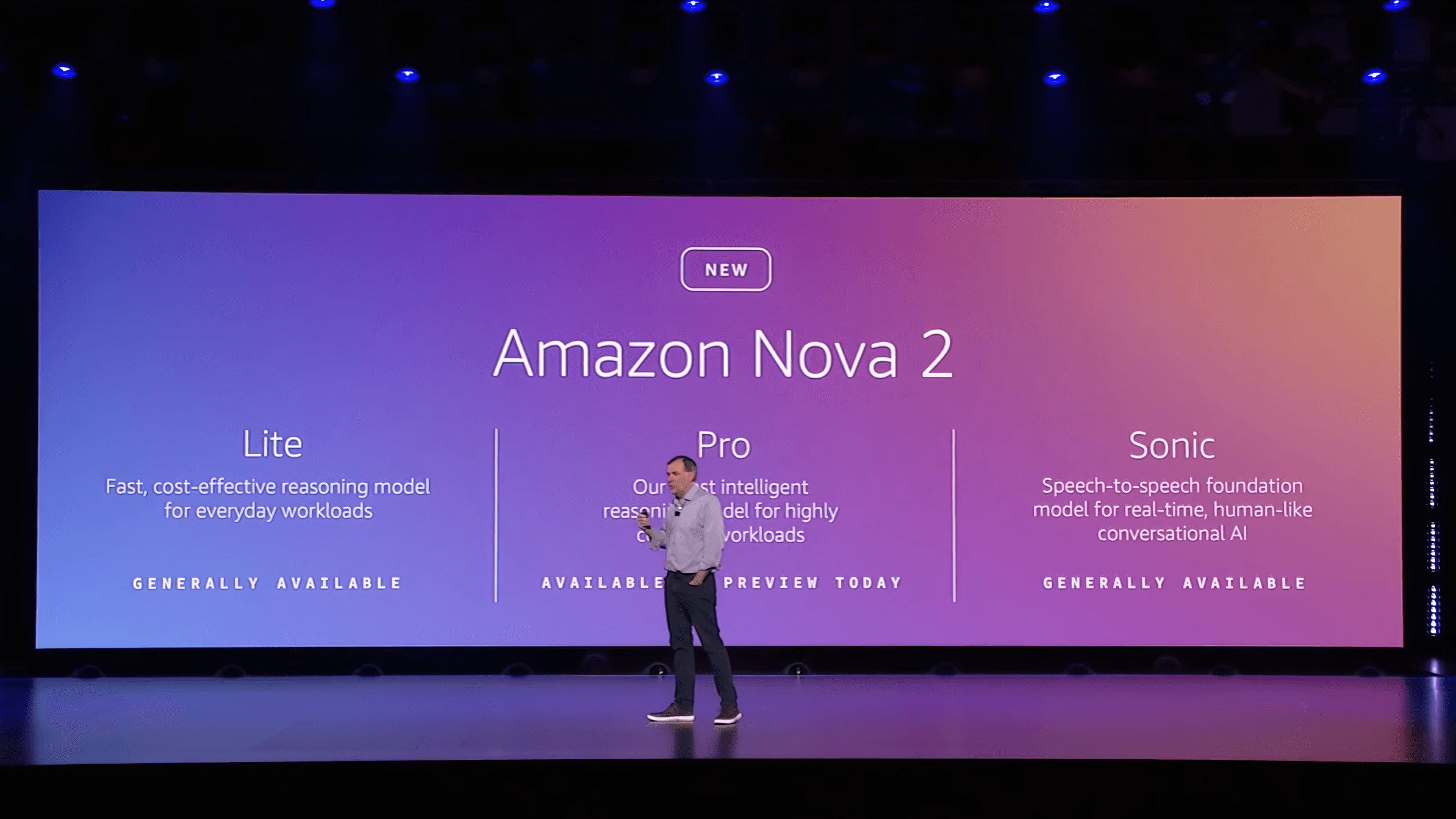
Amazon has launched its Nova 2 AI models at the re:Invent 2025 conference, offering lower pricing compared to competitors OpenAI and Google, while still not matching the performance of top-tier models. This move is part of Amazon's strategy to enhance its in-house hardware and AI capabilities.
OpenAI Runs Back to Scaling Laws as Google Pushes It Into ‘Code Red’
NeutralArtificial Intelligence
OpenAI is reportedly developing a new model named Garlic as it faces intensified competition from Google, which has prompted the company to revisit its scaling laws for AI development. This shift comes amid concerns about Google's growing influence in the AI sector, particularly with its recent advancements in AI models and infrastructure.
Tech Giants Build Fake Amazon and Gmail to Train AI Agents
NeutralArtificial Intelligence
Tech giants Amazon, Google, and Microsoft are developing exact replicas of popular web platforms like Amazon and Gmail to train AI agents, enabling them to navigate the digital landscape similarly to humans. This initiative aims to enhance the capabilities of AI systems in understanding and interacting with online environments.