US senators seek to block Nvidia sales of advanced chips to China

Financial TimesThursday, December 4, 2025 at 7:49:55 PM
US senators seek to block Nvidia sales of advanced chips to China
  • US senators are advancing a bipartisan bill aimed at blocking Nvidia from selling advanced AI chips to China, reflecting growing concerns over national security and the potential transfer of sensitive technology to Beijing.
  • This legislative move could significantly impact Nvidia's operations, as the company has already faced substantial financial losses due to U.S. regulations limiting its ability to export AI chips, particularly affecting its future in the Chinese market.
  • The situation underscores a broader tension between the U.S. and China regarding technology transfers, with ongoing discussions about chip tracking and export controls, as well as fears of an AI bubble affecting investor sentiment across global markets.
— via World Pulse Now AI Editorial System


Was this article worth reading? Share it

Recommended apps based on your readingExplore all apps
Continue Readings
US trade with China probably needs to be smaller, USTR's Greer says
NeutralFinancial Markets
USTR's Jamieson Greer indicated that US trade with China may need to be reduced, reflecting ongoing concerns about the economic relationship between the two nations. This statement comes amid a backdrop of shifting strategies, with the US expected to transition from containment to a focus on technological rivalry with China by 2026.
China's Risky Shadow Banks Back in Spotlight After Xi's Debt Crackdown
NegativeFinancial Markets
China's crackdown on borrowing by local governments has led state-run entities in affluent provinces to seek expensive credit from shadow banks, raising concerns about the risks associated with this opaque segment of the financial system. This move follows President Xi Jinping's efforts to manage debt levels and stabilize the economy amid growing financial pressures.
Brazil soy exports jump 64% in November ahead of Chinese shift to US
PositiveFinancial Markets
Brazil's soybean exports surged by 64% in November, driven by a shift in demand from China towards U.S. suppliers. This increase highlights Brazil's significant role in the global soybean market as it adapts to changing trade dynamics.
The US may be running the wrong AI race
NeutralFinancial Markets
The U.S. may be misaligning its artificial intelligence (AI) strategy by focusing on large, complex models, while China is successfully leveraging smaller, cost-effective models like DeepSeek, which could yield better results in the competitive AI landscape. This shift in approach highlights a potential divergence in technological priorities between the two nations.
Cathay Capital on Macron's Visit in China
PositiveFinancial Markets
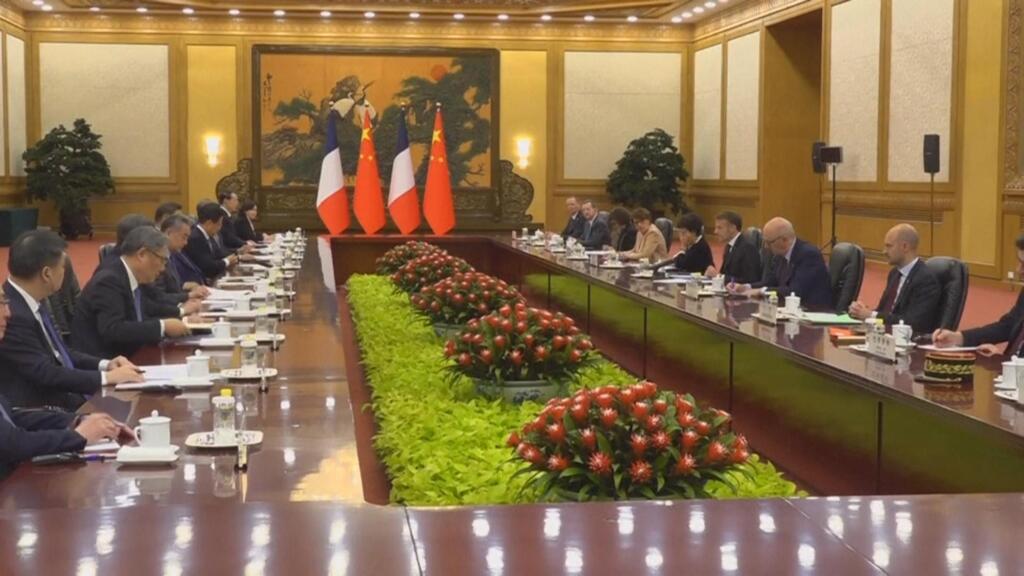
French President Emmanuel Macron's recent visit to China included a meeting with President Xi Jinping, resulting in the signing of a dozen cooperation agreements aimed at enhancing bilateral relations. Bruno Bezard, Managing Partner at Cathay Capital, emphasized the importance of such state visits for maintaining government communication and strengthening business ties.
BofA examines the cause of China’s recent infrastructure investment slump
NeutralFinancial Markets
Bank of America (BofA) is analyzing the recent slump in China's infrastructure investment, which has raised concerns about the country's economic stability and growth prospects. This downturn is attributed to various factors, including a struggling housing market and declining consumer confidence.
France's Macron pushes for more investment, trade rebalancing in China visit
PositiveFinancial Markets
French President Emmanuel Macron is on a visit to China accompanied by business leaders, aiming to attract increased Chinese investment in France and address the trade deficit between the two nations. This visit includes discussions with Chinese President Xi Jinping and the signing of multiple cooperation agreements.
Exclusive-China state-owned banks soak up dollars to slow yuan gains, sources say
NeutralFinancial Markets
China’s state-owned banks are reportedly absorbing U.S. dollars to mitigate the appreciation of the yuan, a move that reflects the government's efforts to stabilize its currency amid economic pressures. This strategy comes as the country faces challenges such as a struggling housing market and low consumer confidence.