Mystery heatwave warms Pacific Ocean to new record

BBC NewsFriday, October 17, 2025 at 11:26:57 PM
NeutralScience
Mystery heatwave warms Pacific Ocean to new record
A recent mystery heatwave has caused temperatures in the north Pacific Ocean to reach unprecedented levels, leaving scientists puzzled about the underlying causes. This phenomenon is significant as it could have far-reaching implications for marine ecosystems and climate patterns, highlighting the need for further research to understand its impact.
— via World Pulse Now AI Editorial System

Was this article worth reading? Share it

Recommended apps based on your readingExplore all apps
Continue Readings
A Weak Spot in Earth's Magnetic Field Is Growing, but Scientists Say Not to Worry. Here's a Look at What Shields Us From Space Weather
NeutralScience
Recent observations indicate that a weak spot in Earth's magnetic field is expanding, but scientists assure that this phenomenon does not pose a threat to life on the planet. The magnetosphere, which has undergone significant changes throughout Earth's history, continues to protect the planet from harmful space weather.
Ancient Chinese texts reveal new clues about the 1st recorded solar eclipse
NeutralScience
Ancient Chinese texts have provided new insights into the first recorded solar eclipse, allowing scientists to explore historical astronomical phenomena with greater accuracy. These ancient records serve as a valuable resource for understanding celestial events that occurred centuries ago.
Deep-sea mining tests impact over a third of seabed animals - scientists
NegativeScience
Recent studies indicate that deep-sea mining activities have detrimental effects on over a third of seabed animal populations, raising alarms among scientists regarding the environmental impact of such operations. This finding adds to the ongoing debate about balancing green technology advancements with ecological preservation.
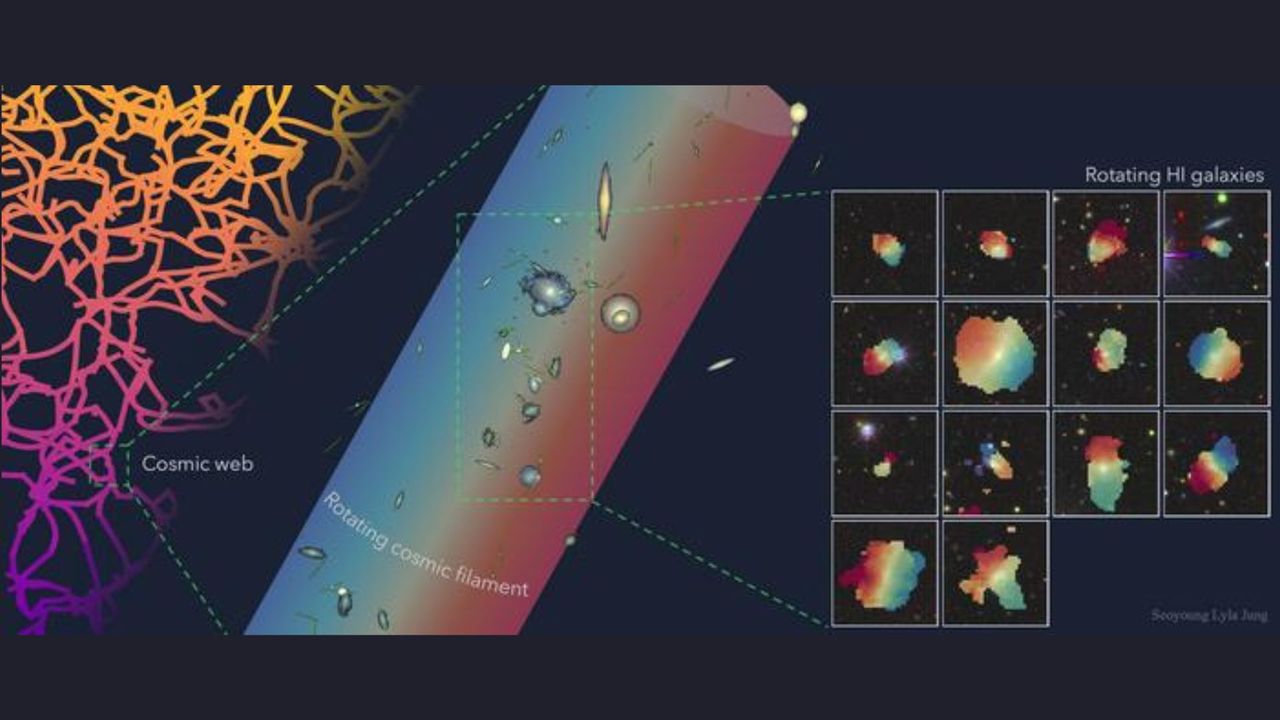
Scientists discover one of our universe's largest spinning structures — a 50-million-light-year-long cosmic thread
PositiveScience
Scientists have discovered a colossal cosmic thread measuring 50 million light-years in length, which may reshape our understanding of how cosmic environments influence galaxy formation. This discovery highlights the intricate structures that exist within the universe, suggesting a more complex interplay between galaxies and their surroundings.