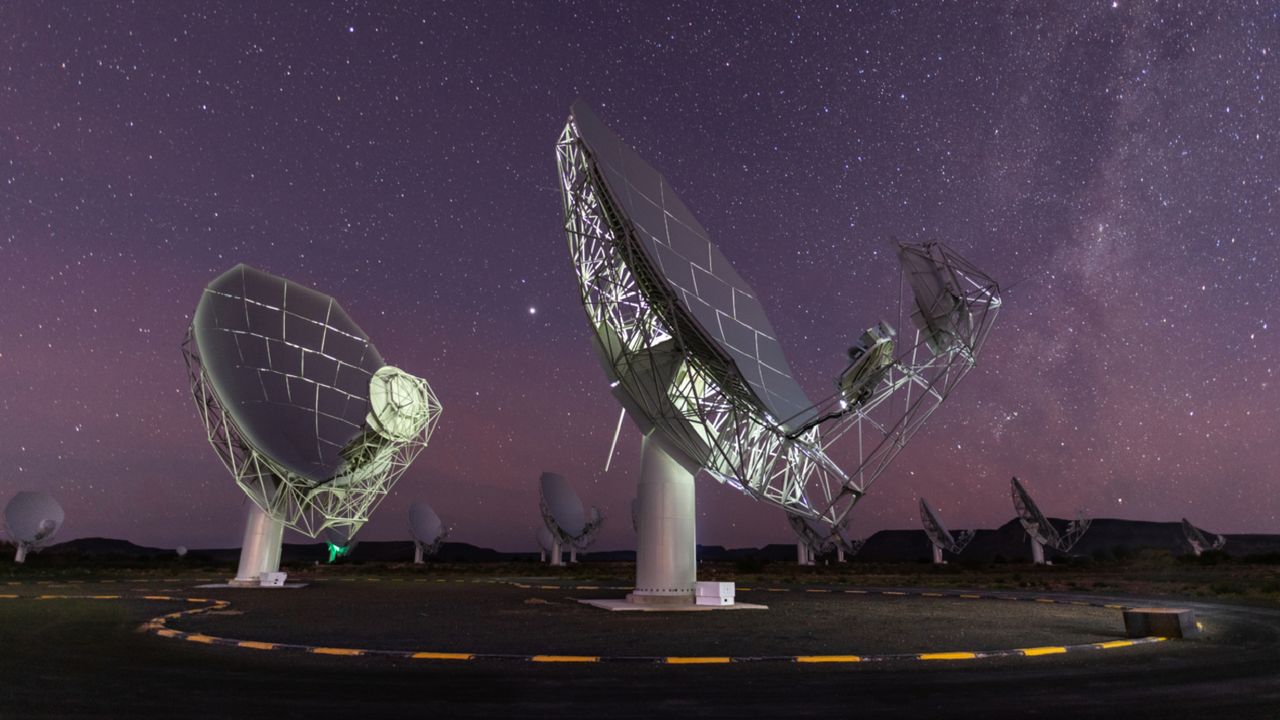
Astronomers detect first 'radio signal' from interstellar comet 3I/ATLAS — but it wasn't aliens

Live ScienceTuesday, November 11, 2025 at 8:00:00 PM
NeutralScience
Astronomers detect first 'radio signal' from interstellar comet 3I/ATLAS — but it wasn't aliens
Astronomers at South Africa's MeerKAT radio telescope have detected the first radio waves from the interstellar comet 3I/ATLAS. This discovery, while it may evoke thoughts of alien life, actually serves as further evidence of the comet's natural origins. The detection occurred on November 11, 2025, and marks a significant milestone in the study of interstellar objects, providing insights into their characteristics and behaviors.
— via World Pulse Now AI Editorial System

Was this article worth reading? Share it

Recommended apps based on your readingExplore all apps
Continue Readings
Giant Mirrors in Space Could Bring Sunlight After Dark, One Startup Says—and Astronomers Are Concerned
NegativeScience
A startup has proposed deploying giant mirrors in space to harness solar energy at night, a concept that has sparked significant concern among astronomers and critics who argue it could obstruct celestial observations and pose health risks to humans and wildlife.
A 'super-puff' exoplanet is losing its atmosphere, and the James Webb Space Telescope had a look
NeutralScience
Astronomers have observed a distant exoplanet, known as a 'super-puff', actively losing its atmosphere into space, forming a significant helium gas cloud that extends beyond its parent star. This real-time observation was made possible by the James Webb Space Telescope, highlighting the dynamic nature of planetary atmospheres.