China is leading the world on AI governance: other countries must engage

Nature — Machine LearningWednesday, December 10, 2025 at 12:00:00 AM
  • China is positioning itself as a leader in global artificial intelligence (AI) governance, aiming to establish comprehensive regulations that could shape international standards and practices in AI. This initiative reflects China's strategic intent to influence the global AI landscape and ensure its technologies align with its national interests.
  • The significance of this development lies in China's ambition to set the agenda for AI governance, which could impact how AI technologies are developed and deployed worldwide. By taking a proactive stance, China seeks to enhance its soft power and technological leadership in a rapidly evolving field.
  • This move occurs amid a competitive landscape where various countries are grappling with the implications of AI technologies. The divergence in strategies among major players, such as the contrasting approaches of companies like ByteDance and DeepSeek, underscores the complexities of AI governance and the need for collaborative frameworks that address ethical and operational challenges in AI deployment.
— via World Pulse Now AI Editorial System
Was this article worth reading? Share it

Recommended apps based on your readingExplore all apps
Continue Readings
US taking 25% cut of Nvidia chip sales “makes no sense,” experts say
NegativeArtificial Intelligence
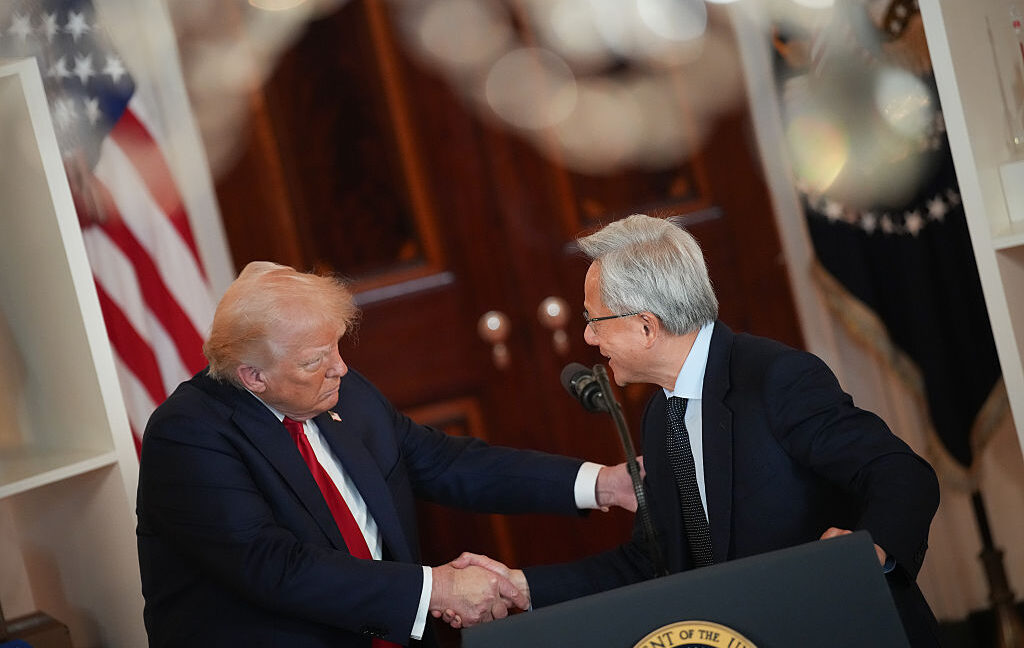
President Trump has announced a significant policy shift allowing Nvidia to sell its advanced H200 AI chips to approved customers in China, effectively lifting a previous export ban imposed due to national security concerns. This decision includes a 25% surcharge on sales, which experts have criticized as illogical given the context of the deal.
Why the Bay Area is key to the new US push to win the international AI race
NeutralArtificial Intelligence
The Bay Area is poised to play a crucial role in the Genesis Mission, a multibillion-dollar initiative launched by the Trump administration aimed at enhancing the United States' artificial intelligence capabilities amid growing competition from China. This mission will leverage federal scientific datasets to train AI models and develop AI agents, marking a significant government effort to boost innovation in this critical sector.
How US startups like Oakland-based Brimstone are racing to develop sources of raw materials that the US needs for tech, an industry China has long dominated (Heather Somerville/Wall Street Journal)
PositiveArtificial Intelligence
US startups, including Oakland-based Brimstone, are intensifying efforts to develop domestic sources of critical raw materials essential for technology, an area historically dominated by China. This initiative is part of a broader strategy to enhance supply chain resilience and reduce dependence on foreign sources.
Sources: DeepSeek is developing its new AI model using several thousand Nvidia Blackwell chips, which were smuggled into China via third-party countries (The Information)
NegativeArtificial Intelligence
DeepSeek, a Chinese AI startup, is reportedly developing its next AI model using several thousand Nvidia Blackwell chips that were smuggled into China through third-party countries. This development raises concerns regarding compliance with international trade regulations and the implications of using restricted technology.
Chip Company Plotted to Send Technology to China, Ex-C.E.O. Says
NegativeArtificial Intelligence
The former chief executive of Nexperia, a Dutch semiconductor company, revealed that Dutch officials were aware for years of the company's Chinese owner’s intentions to transfer technology to China. This revelation follows the Dutch government's seizure of Nexperia in September, amid rising concerns over technology security.
Deep Learning, Machine Learning -- Digital Signal and Image Processing: From Theory to Application
PositiveArtificial Intelligence
A recent study highlights the integration of Machine Learning (ML) and Deep Learning (DL) with Digital Signal Processing (DSP) and Digital Image Processing (DIP), showcasing transformative applications in image enhancement, filtering techniques, and pattern recognition. The research emphasizes the use of frameworks like Discrete Fourier Transform (DFT) and Python for real-time data processing.
Privacy Preservation through Practical Machine Unlearning
PositiveArtificial Intelligence
A recent study highlights the significance of Machine Unlearning in enhancing privacy within Machine Learning models. By enabling the selective removal of data from trained models, techniques such as Naive Retraining and Exact Unlearning via the SISA framework are evaluated for their computational costs and feasibility using the HSpam14 dataset. The research emphasizes the integration of unlearning principles into Positive Unlabeled Learning to tackle challenges posed by partially labeled datasets.
Sources: China added AI chips from Chinese groups to its government-approved list of suppliers for the first time, before Trump's move to allow Nvidia exports (Zijing Wu/Financial Times)
NeutralArtificial Intelligence
China has added AI chips from domestic companies, including Huawei and Cambricon, to its government-approved supplier list for the first time, coinciding with the Trump administration's decision to allow Nvidia to export its H200 AI chips to China. This marks a significant shift in China's approach to AI technology procurement amid ongoing geopolitical tensions.
