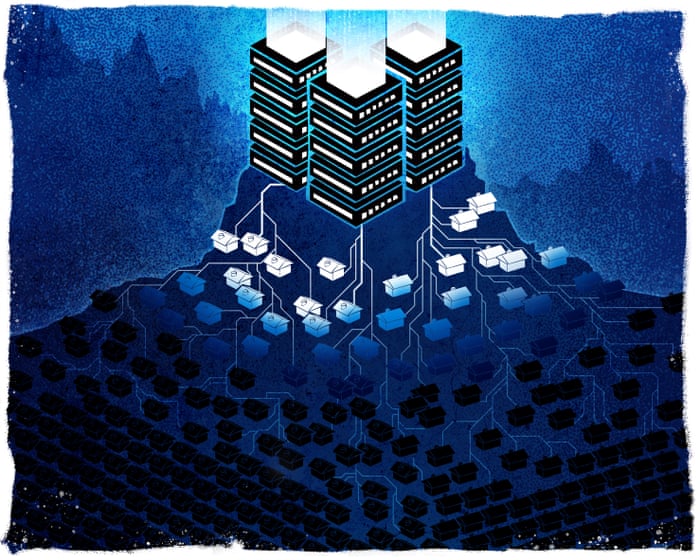
Thirsty work: how the rise of massive datacentres strains Australia’s drinking water supply

The Guardian — Artificial IntelligenceThursday, December 4, 2025 at 2:00:24 PM
Thirsty work: how the rise of massive datacentres strains Australia’s drinking water supply
  • The rapid expansion of datacentres in Australia, particularly in Sydney and Melbourne, is raising concerns about their significant impact on the country's drinking water supply. Experts predict that the water demand for cooling these facilities in Sydney alone could surpass the total drinking water volume of Canberra within the next decade.
  • This surge in water consumption is alarming as it highlights the potential strain on already limited water resources, posing challenges for urban planning and sustainability efforts in Australia, especially amid ongoing climate change.
  • Additionally, the electricity demand from these datacentres is projected to triple in the next five years, raising questions about their sustainability and the feasibility of Australia's net zero ambitions. The intersection of water and energy demands underscores a critical challenge for balancing technological growth with environmental stewardship.
— via World Pulse Now AI Editorial System

Was this article worth reading? Share it

Recommended apps based on your readingExplore all apps
Continue Readings
OpenAI, NextDC Plan to Build Large-Scale Sydney Data Center
PositiveArtificial Intelligence
OpenAI and NextDC Ltd. have announced a partnership to develop a large-scale data center in Sydney, marking a significant step in enhancing data infrastructure in Australia. This collaboration aims to support the growing demand for AI technologies and services, particularly as OpenAI continues to expand its offerings.
Gong study: Sales teams using AI generate 77% more revenue per rep
PositiveArtificial Intelligence
A recent study by Gong reveals that sales teams utilizing artificial intelligence (AI) generate 77% more revenue per representative, indicating a significant shift in how revenue leaders view AI in business decision-making. The study surveyed over 3,000 global revenue leaders and analyzed 7.1 million sales opportunities across various countries, including the United States, United Kingdom, Australia, and Germany.
Dynamic Configuration of On-Street Parking Spaces using Multi Agent Reinforcement Learning
PositiveArtificial Intelligence
A new study has introduced a dynamic configuration system for on-street parking spaces using a multi-agent reinforcement learning framework. This approach aims to optimize parking allocations in urban areas, addressing the growing issue of traffic congestion exacerbated by limited road space due to parked vehicles.
XXLTraffic: Expanding and Extremely Long Traffic forecasting beyond test adaptation
PositiveArtificial Intelligence
XXLTraffic has been introduced as the largest public traffic dataset, featuring extensive data collected from Los Angeles, USA, and New South Wales, Australia, aimed at enhancing traffic forecasting capabilities. This dataset addresses the limitations of current public datasets, which often fail to reflect real-world traffic conditions due to evolving infrastructures and sensor downtimes.
Datacentres demand huge amounts of electricity. Could they derail Australia’s net zero ambitions?
NegativeArtificial Intelligence
Datacentres in Australia are projected to triple their power demand within five years, potentially surpassing the energy consumption of electric vehicles by 2030. Currently, they account for approximately 2% of the electricity drawn from the National Grid, translating to around 4 terawatt hours of power.