Oracle Debt Trades Like Junk as Bond, CDS Spreads Flare

BloombergFriday, December 12, 2025 at 8:03:32 PM
Oracle Debt Trades Like Junk as Bond, CDS Spreads Flare
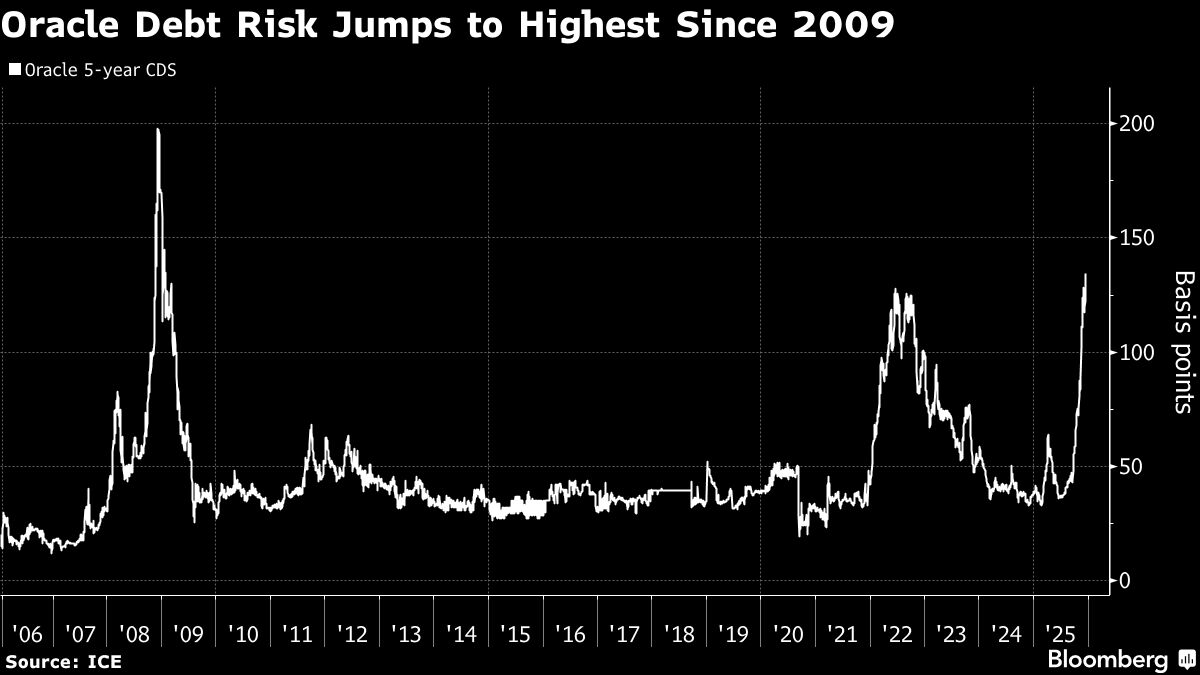
  • Oracle Corp.'s new investment-grade notes are trading at levels typically associated with junk bonds, driven by delays in data center completions and concerns over profitability from its artificial intelligence investments. This shift reflects a significant deterioration in the company's credit risk, which has reached its highest point since 2009.
  • The decline in Oracle's bond ratings and the widening spreads on credit default swaps indicate increasing investor skepticism regarding the company's financial health and its ability to generate returns from its substantial investments in AI technology.
  • This situation highlights broader market trends, as the S&P 500 index recently hit a record high despite Oracle's struggles, suggesting a divergence in performance between individual tech stocks and the overall market. The rising credit risk amid fears of an AI bubble further complicates the outlook for tech firms heavily invested in this sector.
— via World Pulse Now AI Editorial System

Was this article worth reading? Share it

Recommended apps based on your readingExplore all apps
Continue Readings
Rich World’s Rate-Cut Momentum Is Fading Away
NeutralFinancial Markets
The recent monetary policy decisions indicate that the easing cycle in advanced economies is losing momentum or may be nearing its conclusion, as highlighted in the latest analysis. This shift comes amidst ongoing economic challenges and inflation concerns that have prompted central banks to reconsider their strategies.
Corporate-Bond Investors Party as Hangover Looms: Credit Weekly
NeutralFinancial Markets
The corporate-bond market is experiencing a resurgence of investor enthusiasm, despite underlying risks that remain unaddressed. This shift indicates a temporary uplift in sentiment among corporate-bond investors, as they navigate the complexities of the current financial landscape.
Wall Street Skips Tech and Goes Old School for Growth in 2026
NeutralFinancial Markets
As 2026 approaches, Wall Street is shifting its focus away from technology giants that have dominated the bull market, indicating a potential change in growth strategies. This transition suggests that investors may be looking for more traditional sectors to drive market performance in the coming year.
How Debt, Inflation and Politics Are Driving Up Borrowing Costs
NegativeFinancial Markets
A prolonged period of elevated long-term bond yields is increasing borrowing costs globally, as investors seek higher compensation for government debt amid persistent budget deficits and inflation concerns. This situation raises questions about central bank independence and its impact on monetary policy.
Stocks Slide as Tech Selloff Deepens | Closing Bell
NegativeFinancial Markets
U.S. stocks experienced a significant decline as a selloff in technology shares deepened, reflecting negative sentiment in the market. Analysts Romaine Bostick, Katie Greifeld, Carol Massar, and Tim Stenovec provided insights during Bloomberg's closing bell coverage, highlighting the impact of this downturn on investor confidence.
Wall Street Whiplash Hits Trend Chasers in Year of Endless Noise
NeutralFinancial Markets
Wall Street has faced significant volatility throughout the year, with analysts anticipating a major shift in market dynamics. This uncertainty has left investors grappling with fluctuating trends and mixed signals, contributing to a climate of apprehension in financial markets.
Bloomberg Markets 12/12/2025
NeutralFinancial Markets
Bloomberg Markets on December 12, 2025, featured discussions on market movements across various global asset classes, with insights from notable guests including BitGo Co-Founder and CEO Mike Belshe, along with Bloomberg analysts Ed Ludlow, Keith Naughton, Dave Lee, and Poonam Goyal.
First Brands Aims to Assure Lenders by Chasing Trapped Funds
NeutralFinancial Markets
First Brands is working to reassure creditors following a significant decline in the value of its $1.1 billion rescue loan, which has been impacted by ongoing bankruptcy proceedings. The company has filed for Chapter 11 and is attempting to unlock funds from receivables that are currently inaccessible.

Ready to build your own newsroom?

Subscribe to unlock a personalised feed, podcasts, newsletters, and notifications tailored to the topics you actually care about