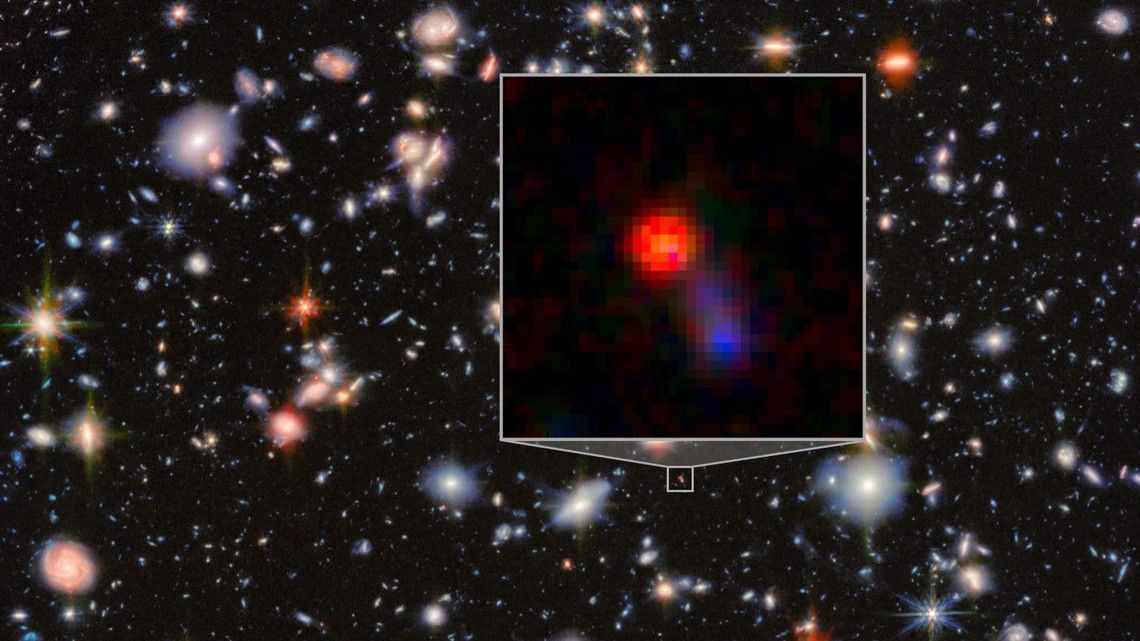
James Webb telescope finds supermassive black hole hidden inside 'Jekyll and Hyde' galaxy

Live ScienceWednesday, December 17, 2025 at 1:12:33 PM
PositiveScience
James Webb telescope finds supermassive black hole hidden inside 'Jekyll and Hyde' galaxy
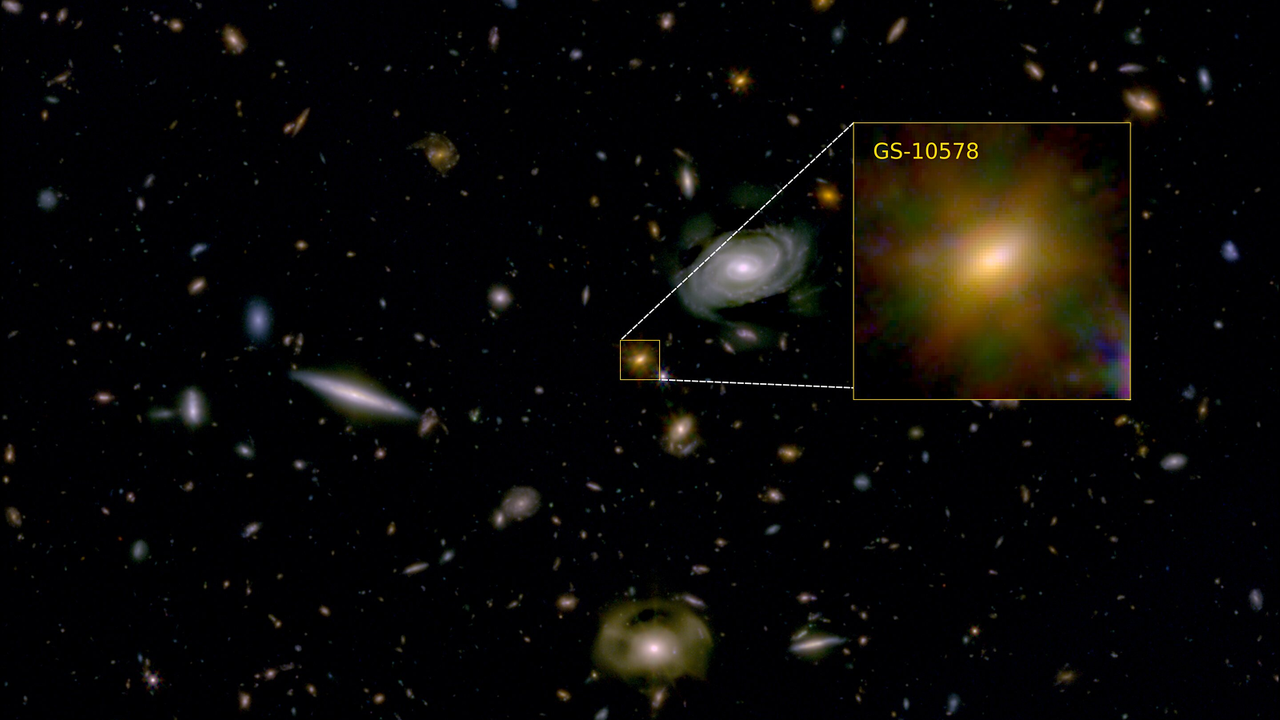
  • The James Webb Space Telescope has discovered a hidden supermassive black hole within the ancient 'Jekyll and Hyde' galaxy, indicating that some of the universe's most extreme objects may remain undetected unless observed in infrared wavelengths. This finding underscores the telescope's capabilities in unveiling cosmic phenomena previously obscured from view.
  • This discovery is significant as it enhances understanding of supermassive black holes and their role in galaxy formation and evolution. The ability to detect such objects in infrared light opens new avenues for research, potentially leading to further revelations about the nature of the universe.
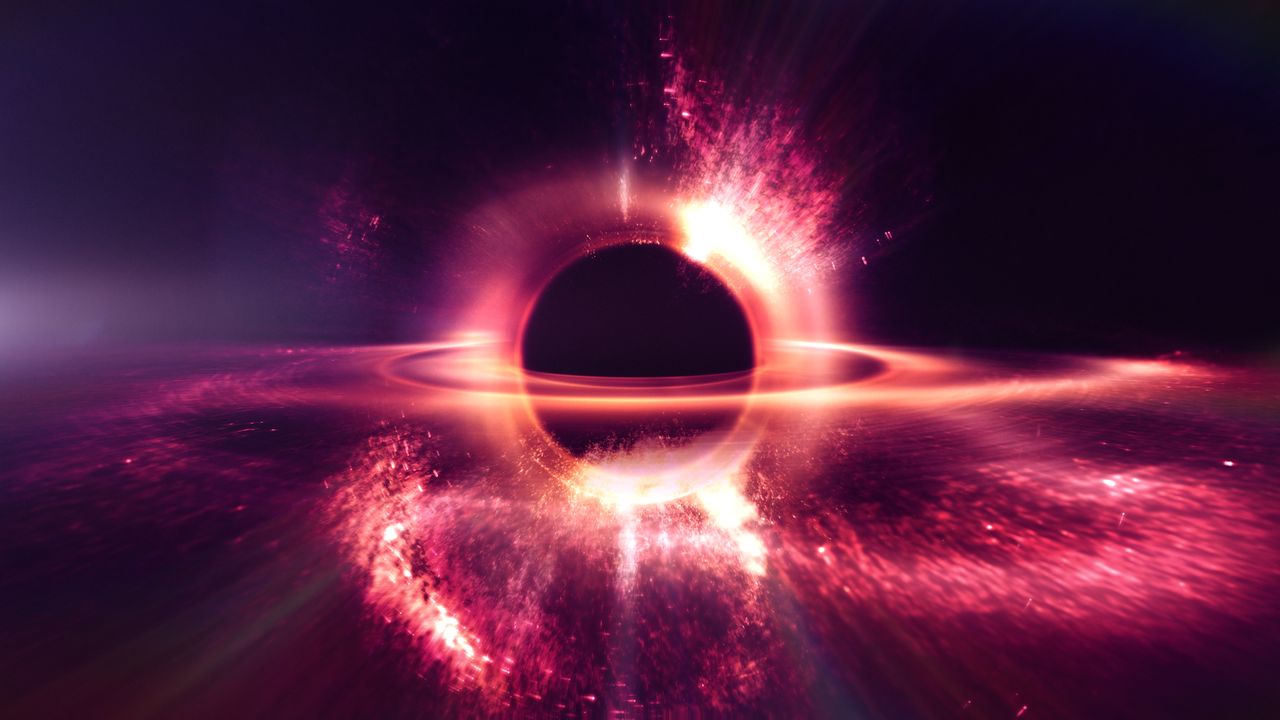
  • The identification of this black hole aligns with recent observations of other supermassive black holes, including one that emits winds at extraordinary speeds and another that may represent the earliest known black hole. These findings collectively highlight the importance of advanced observational technologies in exploring the complexities of cosmic structures and their behaviors.
— via World Pulse Now AI Editorial System
Was this article worth reading? Share it

Recommended apps based on your readingExplore all apps
Continue Readings
Black hole butterflies? James Webb telescope spots dozens of black hole 'cocoons' in early universe.
NeutralScience
The James Webb Space Telescope has identified numerous gaseous cocoons surrounding small black holes in the early universe, suggesting these 'little red dots' may be more complex than previously understood. This discovery provides new insights into the formation and evolution of black holes shortly after the Big Bang.
Strange, 'starved' galaxy died 'a death of 1,000 cuts' in the ancient universe, JWST reveals
NeutralScience
New observations from the James Webb Space Telescope (JWST) reveal that a supermassive black hole in an ancient galaxy likely starved the galaxy of gas necessary for star formation, leading to its demise described as 'a death of 1,000 cuts'. This finding enhances understanding of the early universe's dynamics.

Ready to build your own newsroom?

Subscribe to unlock a personalised feed, podcasts, newsletters, and notifications tailored to the topics you actually care about