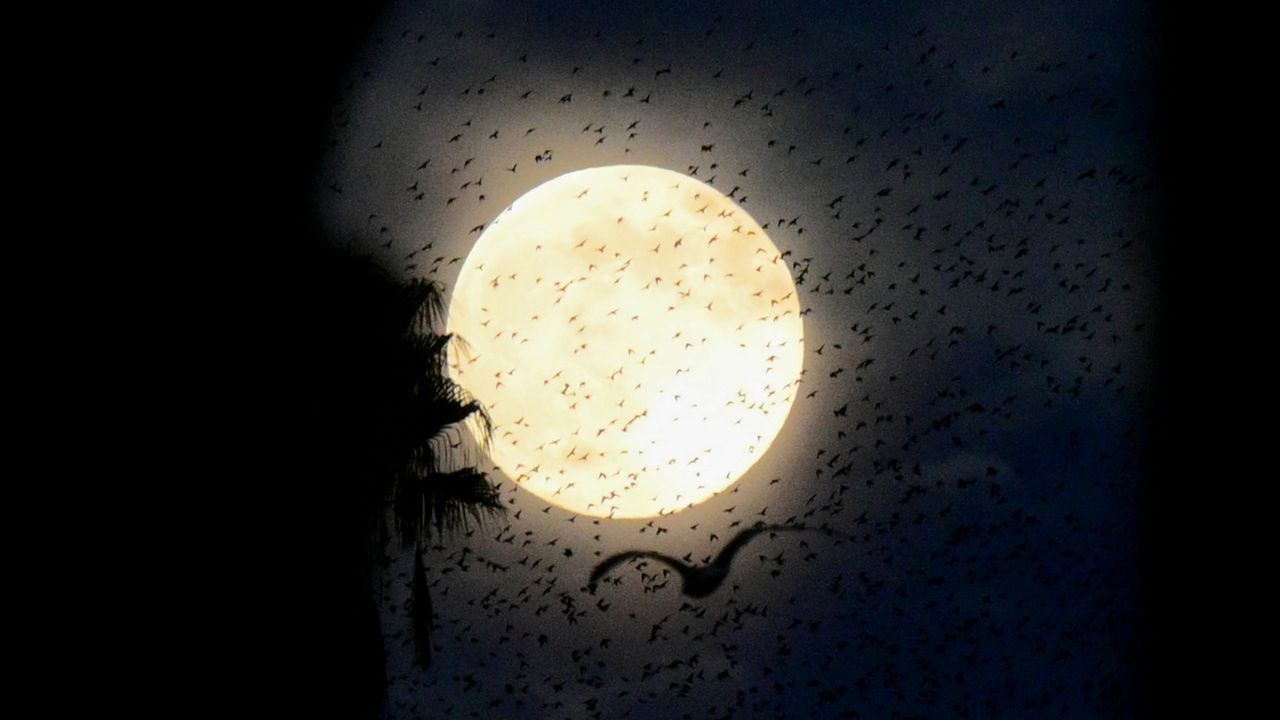
December's 'Cold Moon' rises: See breathtaking images of the final full moon of 2025

Space.comFriday, December 5, 2025 at 11:39:49 AM
PositiveScience
December's 'Cold Moon' rises: See breathtaking images of the final full moon of 2025
  • December's 'Cold Moon' rose on December 4, 2025, marking the final full moon of the year as it approached its closest point to Earth in its monthly orbit. This celestial event, known for its striking appearance, captivated stargazers around the world.
  • The significance of the Cold Moon lies in its visibility and the opportunity it presents for astronomical observation, as it appears larger and brighter than usual due to its proximity to Earth. This event concludes a year filled with notable lunar phenomena, enhancing public interest in astronomy.
  • The Cold Moon's rise is part of a broader pattern of lunar events that have engaged the public's fascination, including the recent Harvest Supermoon and the visibility of other celestial bodies like Mercury. Such occurrences highlight the dynamic nature of our night sky and the ongoing interest in celestial events, encouraging both amateur and seasoned astronomers to explore the wonders of space.
— via World Pulse Now AI Editorial System

Was this article worth reading? Share it

Recommended apps based on your readingExplore all apps
Continue Readings
A Weak Spot in Earth's Magnetic Field Is Growing, but Scientists Say Not to Worry. Here's a Look at What Shields Us From Space Weather
NeutralScience
Recent observations indicate that a weak spot in Earth's magnetic field is expanding, but scientists assure that this phenomenon does not pose a threat to life on the planet. The magnetosphere, which has undergone significant changes throughout Earth's history, continues to protect the planet from harmful space weather.
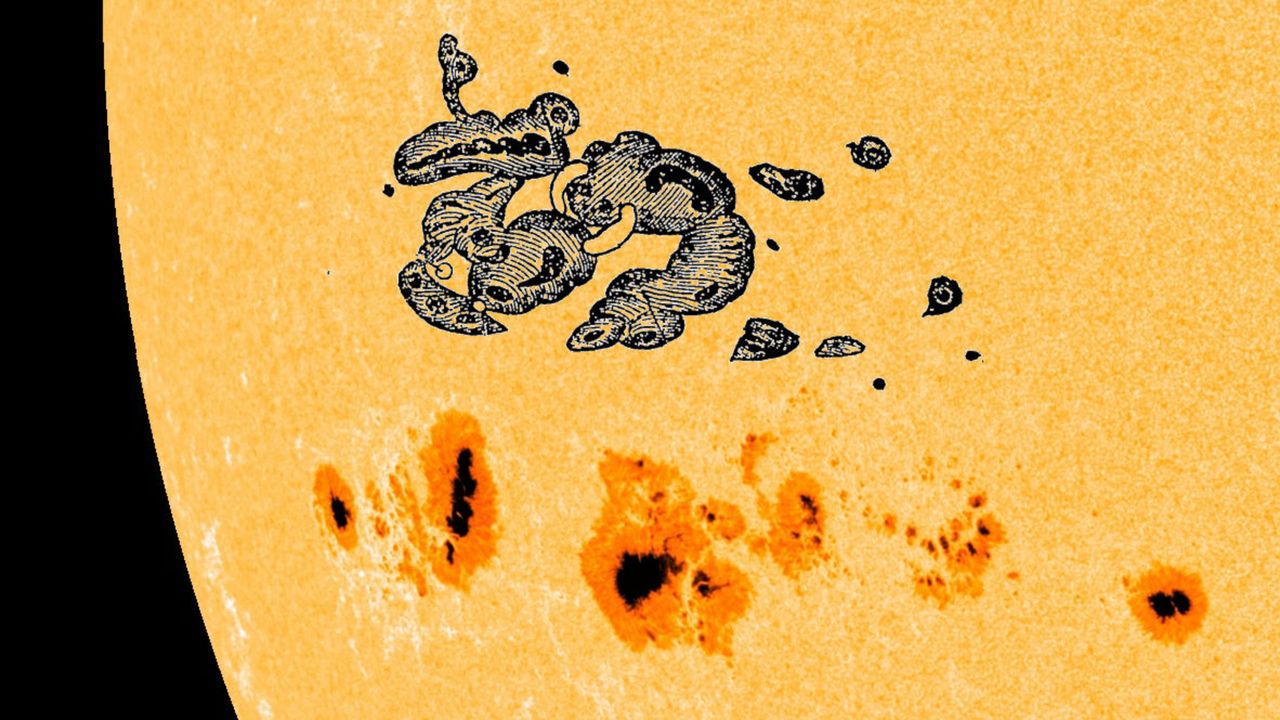
Giant sunspot on par with the one that birthed the Carrington Event has appeared on the sun — and it's pointed right at Earth
NeutralScience
A massive sunspot complex, identified as AR 4294-4296, has emerged on the sun and is currently facing Earth. This sunspot is comparable to the one that caused the Carrington Event in 1859, although it remains inactive at this time.
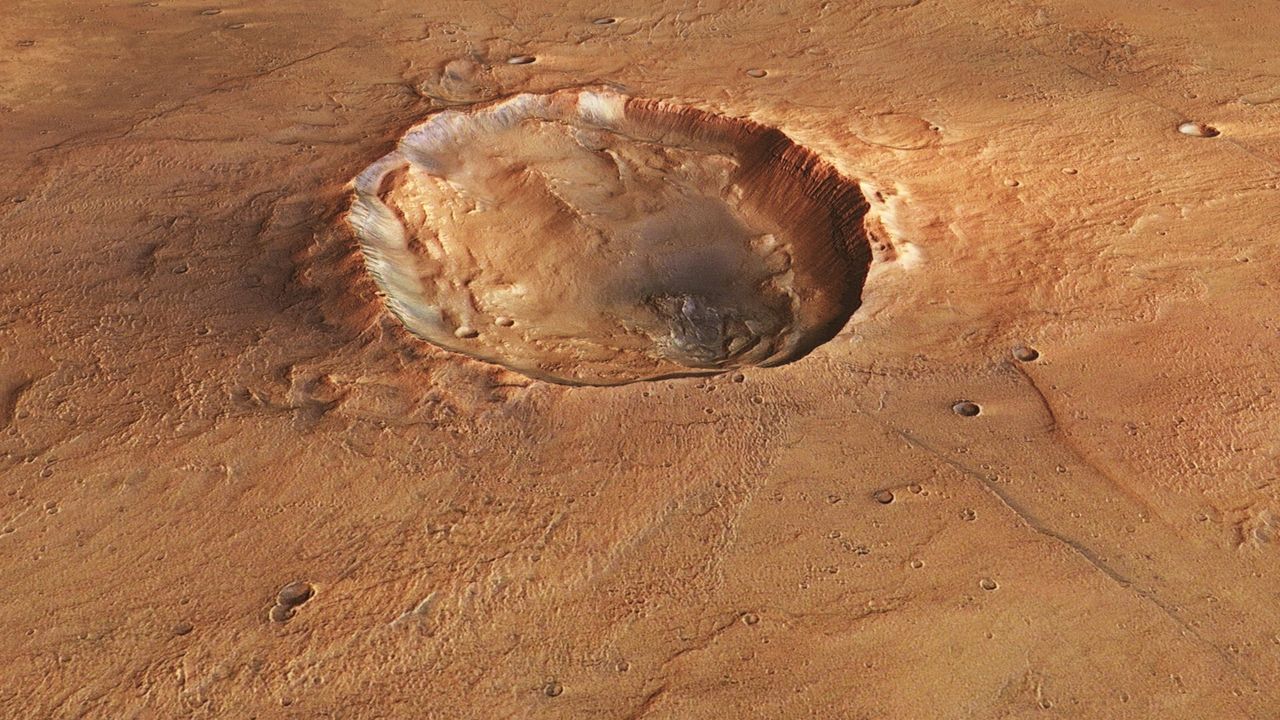
Mars orbiter sees 'butterfly' crater spread its wings on the Red Planet
PositiveScience
A recent observation from a Mars orbiter has revealed a striking impact crater on the Red Planet, characterized by debris that resembles butterfly wings unfurling across the Martian surface. This captivating image highlights the dynamic geological processes at play on Mars, showcasing the planet's unique landscape.
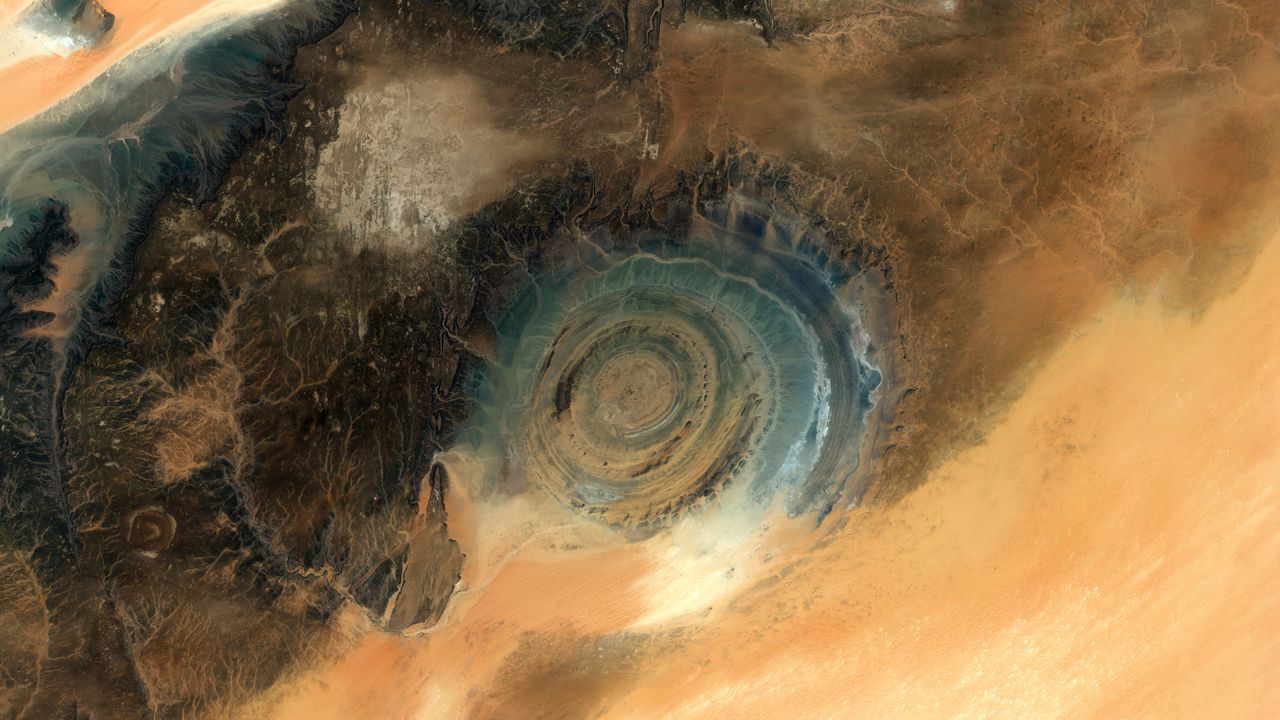
Seeing a bull's-eye in the desert | Space photo of the day for Dec. 5, 2025
NeutralScience
A striking image captured in the Saharan Desert has raised questions about whether it is a crater. The photo, featured as Space.com's photo of the day on December 5, 2025, showcases a unique geological formation that resembles a bull's-eye.
'Hubble tension' is back again as a new cosmic map deepens the puzzle
NegativeScience
A new cosmic map has reignited the debate surrounding the 'Hubble tension,' a discrepancy in the measurement of the universe's expansion rate. This development suggests that previous assumptions may need reevaluation, as researchers work to narrow down viable explanations for the observed inconsistencies.
Geminids 2025: The year's best meteor shower is coming, with a second shower hot on its tail
PositiveScience
The Geminid meteor shower has commenced, with its peak expected on the nights of December 13 and 14, 2025, offering a spectacular display of up to 150 shooting stars per hour in a moonless sky. This annual event is renowned for its vibrant and colorful meteors, captivating stargazers around the world.
Rare solar flare caused radiation in Earth's atmosphere to spike to highest levels in nearly 20 years, researchers say
NegativeScience
In November, a rare solar super-flare resulted in a significant spike in cosmic radiation levels in Earth's atmosphere, reaching the highest levels recorded in nearly 20 years. This event underscores the dynamic nature of solar activity and its direct impact on our planet's environment.
Mercury is hard to spot, but you can catch it in the morning sky this month
PositiveScience
Mercury, the innermost planet of the solar system, is currently visible in the morning sky, providing a rare opportunity for skywatchers to observe this elusive celestial body. This month marks an ideal time to catch a glimpse of Mercury, which is often difficult to spot due to its proximity to the Sun.