'We were amazed': Scientists using James Webb telescope may have discovered the earliest supernova in the known universe
PositiveScience
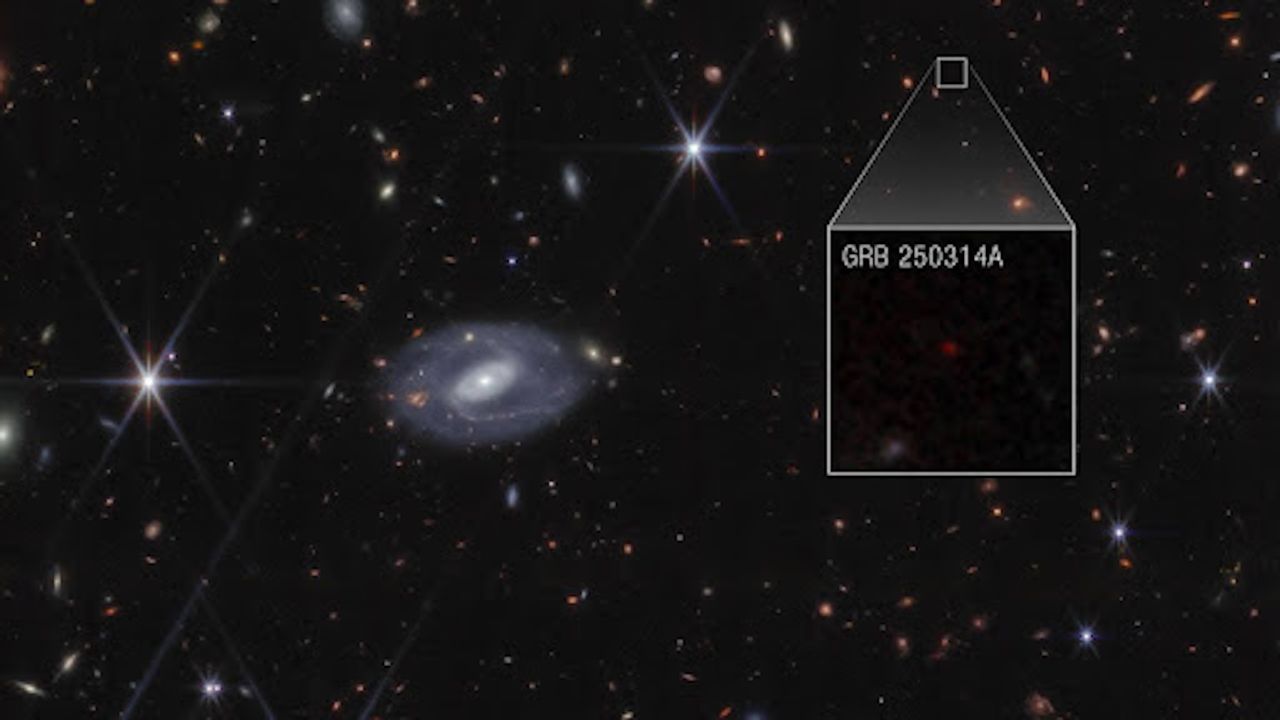
- Astronomers utilizing the James Webb Space Telescope (JWST) have reported a significant discovery, suggesting that a powerful gamma-ray burst detected in March may have originated from the explosion of a massive star just 730 million years after the Big Bang. This finding could represent the earliest supernova observed in the universe, offering new insights into cosmic events shortly after the universe's formation.
- The identification of this potential supernova is crucial as it enhances understanding of the early universe's evolution and the lifecycle of stars. Such discoveries can provide valuable information about the conditions and processes that prevailed in the universe's infancy, contributing to the broader field of astrophysics.
- This discovery aligns with a series of groundbreaking findings from the JWST, including the identification of ancient supermassive black holes and the first stars in the universe. These developments underscore the telescope's role in reshaping our understanding of cosmic history and the formation of galaxies, highlighting the ongoing quest to unravel the mysteries of the universe's early stages.
— via World Pulse Now AI Editorial System